

Your Complete Guide to Choosing a Voice Translator Device
Ever stood in a bustling foreign market, trying to ask for a price, only to be met with a confused stare? Or maybe you've been in a crucial business meeting, feeling the deal slip away because you couldn't bridge the language gap in real time. That feeling of being disconnected—knowing what you want to say but lacking the words—is incredibly frustrating.
It’s a common hurdle for travelers, expatriates, and professionals alike. You're not just trying to translate words; you're trying to connect with another person, close a deal, or simply navigate a new place with confidence. A clunky phrasebook or a slow typing app just won't cut it when you need a smooth, natural conversation.
This guide has one clear goal: to show you how a voice translator device or a powerful app can solve this problem. We'll give you specific, actionable advice to help you choose the right tool and use it effectively, so you can stop feeling lost in translation and start having real conversations.
The Modern Fix for an Age-Old Problem
This is where a modern voice translator device (or a powerful app) completely changes the game. Think of it as a personal interpreter that fits right in your pocket.
These gadgets are designed for one thing: to capture what you say, run it through some seriously smart AI, and speak it aloud in another language almost instantly. This technology is what turns a confusing encounter into a clear, confident conversation.
And it’s not a niche gadget anymore. The global market for these devices is booming, hitting USD 1.49 billion in 2024 and on track to reach an incredible USD 4.02 billion by 2034. According to data from Precedence Research, this growth is largely driven by travelers who are tired of feeling lost in translation.
Instead of feeling stuck, you feel empowered. A simple tool can bridge that gap, helping you:
- Connect confidently with people anywhere in the world.
- Navigate new places with total ease and independence.
- Build stronger relationships, both in business and in your personal life.
- Feel heard and understood, no matter what language you speak.
The goal isn't just about swapping words anymore; it's about enabling real human connection. By taking the language barrier out of the equation, these devices let you focus on what truly matters: the conversation itself.
The Magic Inside: How Voice Translators Actually Work
Ever wondered what happens inside a voice translator in that split second between you speaking English and it speaking Japanese? It isn't magic, but it's a brilliant three-step dance powered by some seriously smart AI. Think of it like a team of hyper-efficient interpreters living in your pocket.
First, the device has to listen. This is where Automatic Speech Recognition (ASR) comes in, acting as the 'ears' of the whole operation. Its one and only job is to take your spoken words and turn them into digital text. ASR models are trained on millions of hours of speech so they can accurately pick up on different accents, dialects, and how fast people talk—just like a human interpreter leaning in to catch every word.
Once your voice is converted to text, it's handed off to the 'brain' of the system: Neural Machine Translation (NMT). This is where the real heavy lifting happens. Instead of just swapping words one-for-one like an old-school dictionary, NMT models look at the entire sentence to understand context, slang, and what you really mean. It's this deep understanding that makes modern translations sound so natural and not robotic.
This whole process is about bridging a communication gap, turning a moment of confusion into a genuine connection.
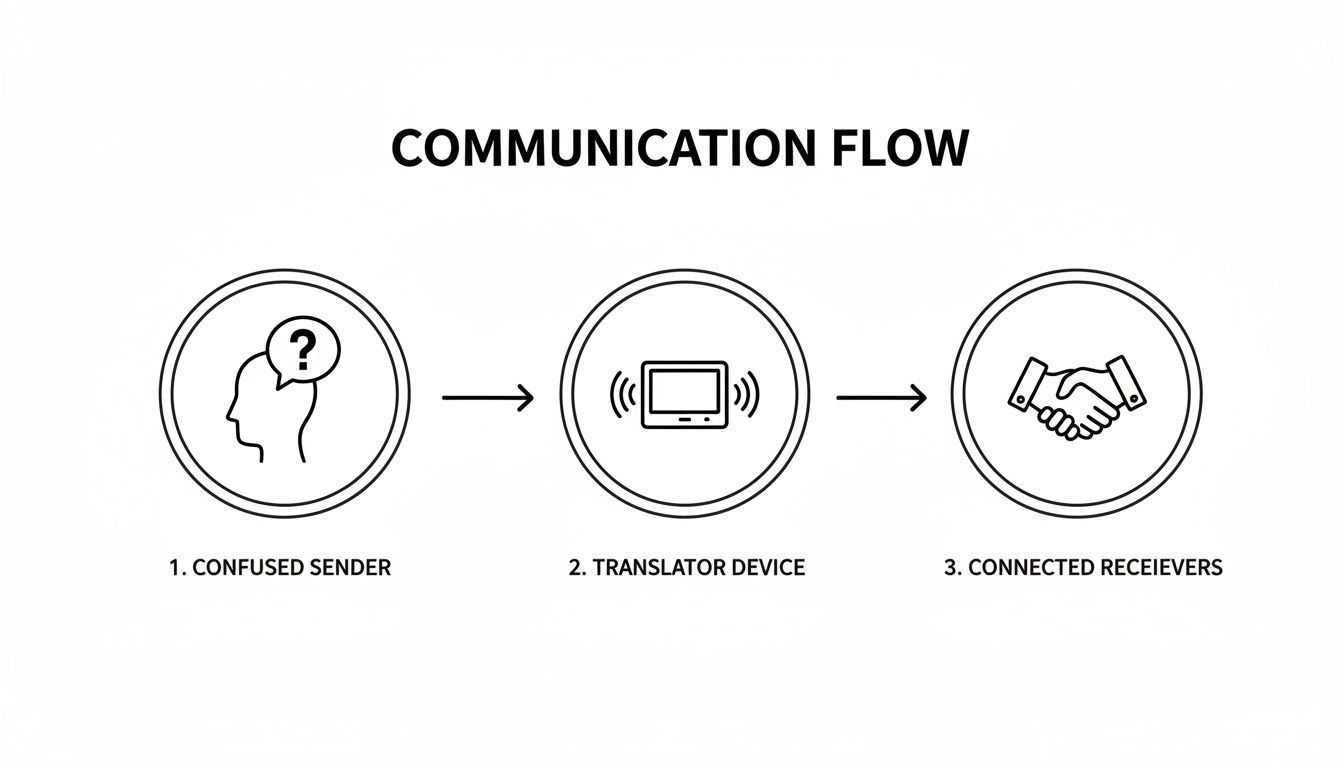
This simple flow—from a person with a question, through the device, to someone who now understands—is what it's all about.
From Text Back to Voice
After the NMT engine has the translated text ready, the final step is to give it a voice. That's the job of Text-to-Speech (TTS) synthesis, the 'mouth' of the device.
Modern TTS systems are incredibly sophisticated. They don't just read words aloud; they generate human-like speech with natural-sounding intonation and rhythm. This makes sure the output sounds authentic to a native speaker, keeping the conversation smooth and comfortable.
These three AI-driven stages are the secret sauce behind every good voice translator. Let's break them down.
Core Technologies in a Voice Translator
| Technology | What It Does (The Simple Version) | Why It Matters for You |
|---|---|---|
| Automatic Speech Recognition (ASR) | The "Ears" – It listens to your voice and turns your spoken words into text. | If this part fails, the whole translation falls apart. Good ASR means the device understands you, even with an accent or background noise. |
| Neural Machine Translation (NMT) | The "Brain" – It takes the text and translates it into another language, focusing on context. | This is what separates modern translators from clunky old ones. It ensures the translation makes sense and sounds natural, not just a word-for-word swap. |
| Text-to-Speech (TTS) | The "Mouth" – It takes the translated text and speaks it out loud in a human-like voice. | A natural-sounding voice makes the person you're talking to feel more comfortable. It's the difference between a conversation and a robot reading a script. |
Together, these three technologies—ASR, NMT, and TTS—work in near-perfect harmony. They pull off this complex process in near real-time, creating a fluid conversational experience that would have seemed like pure science fiction just a decade ago.
The entire speech-to-speech translation market, which is built on this tech, is expected to grow to USD 1.25 billion by 2031. This explosive growth is happening because breakthroughs in NMT have pushed accuracy from a shaky 70% to over 95% for many popular languages today. These advancements are what make tools like dedicated voice translators—and powerful smartphone apps—so incredibly effective.
You Already Have the Power in Your Pocket
While dedicated translator devices are great, you don't necessarily need one. Modern smartphone apps use the exact same sophisticated technology, packing that entire translation engine right onto the phone you already own.
An excellent example is the Translate AI app. It combines these advanced ASR, NMT, and TTS systems to power seamless, two-way conversations in over 80 languages. You just speak into your phone, and the app delivers a highly accurate, natural-sounding translation in seconds. If you're curious about the principles behind this, our guide to what machine translation is explains how it all powers today’s best tools.
Key Features to Look for in a Modern Translator
Shopping for a voice translator can feel a bit overwhelming, but a handful of core features separate the genuinely useful tools from the ones that just cause frustration. The single most important feature? Two-way (or bidirectional) translation. This is what allows for a natural, back-and-forth conversation.
Instead of one person talking and then waiting for a clunky, one-way announcement, bidirectional tech lets both people speak freely while the device or app interprets in near real-time. It’s so crucial that these two-way technologies now command over 65% of the market share in 2024. This makes sense when you consider the record-breaking 1.3 billion international tourist arrivals last year—people want to have real conversations, not just broadcast translated sentences. You can dig into more of the market trends on Roots Analysis.
A great translator doesn't just enable speech; it fosters a genuine dialogue.
Core Capabilities for Any Scenario
Beyond conversational flow, language support is obviously a huge factor. Look for a solution that offers a wide range of languages—ideally 80 or more. This gives you the confidence that you’re covered whether you’re navigating the streets of Tokyo or sitting in a business meeting in Berlin.
Another non-negotiable feature is offline functionality. You can't always bet on having Wi-Fi or a stable cell signal when you're traveling. A device or app with downloadable language packs is a lifesaver, giving you peace of mind that your translator will work no matter where you are.
Finally, think about the battery. For a dedicated hardware device, long battery life is a must for all-day exploring without the anxiety of it dying mid-conversation.
A translator is only useful if it's ready when you need it. Prioritizing offline access and a reliable battery ensures your tool is a dependable travel companion, not just a gadget that works sometimes.
Extra Features That Make a Difference
While the core capabilities are what you should focus on first, several other features can massively improve the experience. These are the add-ons that turn a good translator into a great one.
- Photo Translation: The ability to point your camera at a sign, menu, or document and get an instant translation is incredibly practical. It saves you from the tedious task of typing out foreign words you don't recognize.
- Form Factor: Translators come in all shapes and sizes. You might prefer a dedicated handheld device for its simplicity, smart earbuds for hands-free use, or just the convenience of an app on the phone you already own. If that last one sounds interesting, check out our guide on instant translation earbuds.
- Noise-Canceling Microphones: Planning to use your translator in busy places like a crowded market or a bustling train station? A good noise-canceling mic is crucial for the device to pick up your voice accurately.
The App-Based Alternative: Translate AI
For many travelers, a powerful app provides the perfect blend of convenience and capability. Software solutions like the Translate AI app bundle all these key features into the smartphone that’s already in your pocket. It supports bidirectional conversations in over 80 languages and is compatible with the earbuds you already own, offering a practical alternative to buying new, single-purpose hardware.
Dedicated Device vs. a Translation App: Which Is Right for You?
So, you need a translator. The big question is: do you go for a dedicated, single-purpose gadget or use a powerful app on the smartphone you already own?
This is a major fork in the road for any traveler or professional. Each path has its own clear advantages, and the right choice really boils down to your specific needs, your budget, and how you see yourself using it. There's no single "best" answer here—it’s all about what fits your lifestyle.
The core of it is this: do you prefer a specialized tool built from the ground up for one job, or the amazing convenience of a multi-purpose solution you never leave home without? Let's break down the differences.
The Case for a Dedicated Voice Translator Device
There's a real appeal to hardware that’s designed for one thing and one thing only: translating conversations. This focus isn't just a gimmick; it often leads to tangible benefits that make these devices a fantastic choice for certain people.
A standalone voice translator device typically brings a few key things to the table:
- Optimized Hardware: They often come with superior noise-canceling microphones and surprisingly powerful speakers. This hardware is specifically engineered to cut through the noise of a crowded market or a busy train station, where your phone’s tiny mic might struggle.
- Serious Battery Life: A dedicated device isn't juggling dozens of notifications, social media apps, and background processes. Because of this, its battery can often last an entire day of sightseeing and then some, giving you one less thing to worry about.
- Simplicity and Focus: For anyone who isn't super tech-savvy or just wants a tool that works without any fuss, a dedicated device is perfect. There are no notifications popping up or other apps begging for your attention. You turn it on, and it translates. That's it.
For frequent travelers who need a reliable, rugged tool that can handle constant use without killing their phone battery, one of these devices can be a godsend. It’s a straightforward, no-nonsense experience.
The Power and Convenience of a Translation App
On the other side of the aisle, you have translation apps. These turn the supercomputer you already carry in your pocket into a formidable communication tool. For a huge number of people, this convenience is the ultimate trump card. It means not having to buy, charge, and keep track of another piece of hardware.
The primary advantages of just using an app are pretty compelling:
- Cost-Effectiveness: This is a big one. High-quality apps are often free or come with a low-cost subscription. Compare that to a dedicated device, which can easily set you back $150 to $300 or more.
- Constant Improvement: Software developers are always pushing out updates. Your app gets better over time with new languages, improved accuracy, and slick new features—all without you having to buy a new gadget.
- Ultimate Convenience: Let's be honest, you almost never leave home without your phone. Using an app means your translator is always with you, ready for that spontaneous conversation or unexpected question.
This software-first approach offers incredible flexibility and value by making the most of the powerful processor and high-resolution screen you've already paid for.
Voice Translator Device vs. Translation App: A Head-to-Head Comparison
To make the choice even clearer, let's compare the key differences between dedicated hardware and smartphone apps side-by-side. This should help you figure out which solution is a better fit for your lifestyle and travel habits.
| Feature | Dedicated Voice Translator Device | Translation App (like Translate AI) |
|---|---|---|
| Primary Use Case | Frequent, heavy-duty translation in various environments. | Spontaneous, everyday translation for most travel and social situations. |
| Hardware | Optimized mics & speakers designed for noise. Rugged build. | Uses your phone's built-in mic, speaker, and screen. |
| Battery Life | Excellent; often lasts a full day or more of continuous use. | Dependent on your phone's battery, which is shared with many other apps. |
| Convenience | A separate device to carry, charge, and keep track of. | Always with you on your phone; no extra hardware needed. |
| Cost | Higher upfront cost ($150–$300+). No ongoing subscription fees. | Low or no upfront cost; often subscription-based for premium features. |
| Updates & Features | Hardware becomes outdated; firmware updates are less frequent. | Constantly updated with new languages, features, and accuracy improvements. |
| Ease of Use | Extremely simple. Turn it on, select languages, and talk. | Very easy, but operates within the phone's OS (notifications, etc.). |
| Best For | Frequent international business travelers, seniors, or tech-minimalists. | The vast majority of travelers, students, and casual users. |
Ultimately, the best choice depends on what you value most. Is it the single-purpose reliability of a dedicated device, or the cost-effective, ever-improving convenience of an app on your smartphone?
Making Your Decision with Translate AI
For most people who lean toward convenience, value, and flexibility, an app like Translate AI is an incredibly compelling choice. It gives you access to the same powerful translation technology you'd find in those pricey devices, supporting two-way conversations in over 80 languages right on your iPhone.
Plus, a huge bonus is that it works with any earbuds you already own, saving you even more money. You don't need to buy special hardware to have a seamless conversation.
Understanding the pros and cons of each route is the key to making the right call. If you want to dive deeper into what makes a great software solution, you might find our guide on choosing the best live translation app helpful for your specific needs.
The Smarter Alternative: Translate AI on Your Phone
While dedicated voice translators definitely have their place, what if you could get the same powerful technology without buying, carrying, and charging another gadget?
The smartest alternative is often the one you already have in your pocket. Modern smartphone apps now deliver a translation experience that rivals—and in many ways surpasses—dedicated hardware.
These apps put a world-class translation engine right at your fingertips. By using the advanced processor and high-quality screen you already own, they offer a killer combination of convenience and cost-effectiveness. You don’t need to spend $150 to $300 on a new device when your phone can do the job just as well, if not better.
Meet Translate AI: Your Pocket Interpreter
One of the most powerful software solutions is Translate AI, an app designed to turn your iPhone into a real-time translator for smooth, natural conversations.
It supports true two-way dialogue in over 80 languages, allowing you and the person you're speaking with to communicate without those awkward pauses. You just tap, speak, and the app handles the rest.
Here is a quick look at the app's clean interface on the App Store.
As you can see, it’s incredibly simple to select your languages and kick off a conversation instantly.
One of its biggest advantages is flexibility. You don't need specialized hardware; the app works perfectly with any earbuds or AirPods you already have, making conversations discreet and crystal clear. This makes it the ideal voice translator alternative for:
- Travelers who want to navigate new cities with confidence.
- Professionals needing to communicate with international colleagues.
- Language learners looking to practice their conversational skills.
Translate AI packages the core benefits of a high-end translator—speed, accuracy, and extensive language support—into an accessible app. It eliminates the need for extra hardware, saving you money and simplifying your travel kit.
Ready to bridge any language gap? You can download Translate AI from the App Store and start having clearer conversations today.
Getting the Most Out of Your Voice Translator
Owning a great voice translator device or app is one thing, but using it well is what really turns a clunky exchange into a smooth, natural conversation. The AI inside these tools is incredibly powerful, but it’s not magic—it relies on clear input from you to deliver the best results.
Think of your translator as a very literal interpreter. Your job is to give it the cleanest "signal" possible. This means speaking clearly, at a moderate pace, and directly into the device's microphone. Mumbling or rushing your words can easily trip up the speech recognition, leading to some truly confusing translations.
The language you use matters, too. Complex slang, regional idioms, and long, rambling sentences are practically guaranteed to get lost in translation. The key? Keep it simple.
Best Practices for Crystal-Clear Communication
By adopting a few simple habits, you can dramatically improve the accuracy and flow of your translated conversations. It’s not about changing what you say, but how you say it.
- Speak in Short, Simple Sentences: Break down complex thoughts into smaller, digestible chunks. Instead of trying to translate a whole paragraph at once, deliver your message one idea at a time.
- Minimize Background Noise: Try to find the quietest spot you can. A loud café or a windy street corner forces the device to play a guessing game, trying to separate your voice from all the other sounds.
- Pause Between Speakers: This is a big one. Give the translator a moment to process and speak before the other person replies. Jumping in too quickly causes overlapping audio and ensures someone’s words will get missed.
- Use Offline Mode Strategically: If you’re traveling in an area with spotty Wi-Fi, be sure to download language packs ahead of time. This guarantees your translator will work reliably when you're off the grid.
The goal is to make the AI's job as easy as possible. Clear, simple, and direct input will always give you the most accurate and natural-sounding output. That’s how you make your interactions feel less like a transaction and more like a real conversation.
Got Questions? Let's Get Them Answered
Even after getting the rundown on how these translators work, you probably have a few practical questions kicking around. It’s only natural. Let’s tackle the most common ones people ask so you can feel completely confident about this tech.
Just How Accurate Are These Things?
In the right conditions, today’s AI translators can hit over 95% accuracy for common language pairs like English to Spanish or French to German. That’s more than enough for everyday situations—ordering coffee, asking a local for directions, or making small talk. They’re incredibly solid for that.
But let's be real, they're not magic. Heavy accents, super-fast talkers, strong regional slang, or a noisy café can definitely throw them off. And while they might stumble over really technical or poetic language, for getting you through a conversation and making sure you’re understood, they're fantastic.
Do I Have to Be Online for It to Work?
Most of the time, yes. For the best accuracy and the widest range of languages, you’ll want an internet connection. When a device is online, it can tap into massive, constantly updated AI models in the cloud, which gives you the sharpest translations.
That said, many dedicated devices and a few of the top-tier apps offer offline language packs you can download ahead of time. This is an absolute lifesaver for travelers who might be on a plane, in a subway, or just somewhere with spotty Wi-Fi or no cell service.
Are My Conversations Kept Private?
This is a big one, and reputable companies know it. Generally, when you speak into the translator, your voice data is sent to a secure server for processing and is typically deleted right after. It's not stored or listened to by humans.
Still, it’s always smart to take a quick look at the privacy policy of any device or app you're considering. Peace of mind is important.
Your Secure, Private Translation App
If you're looking for a software option that puts privacy first without skimping on performance, Translate AI is designed to deliver powerful, real-time translations securely. You can grab the Translate AI app from the App Store and see for yourself how smooth and secure a conversation on your iPhone can be.