

10 Actionable Traveling to Japan Tips for an Unforgettable Trip in 2026
Dreaming of Japan? The neon glow of Tokyo, the serene temples of Kyoto, the incredible food… it's a destination unlike any other. But you're likely worried about one thing: the language barrier. How will you navigate labyrinthine train stations, order from menus with zero English, or connect with locals when you can't communicate? You don't just want to get by; you want to experience the real Japan, known for its deep culture and hospitality.
This guide provides 10 specific, actionable traveling to Japan tips to solve that exact problem. Our goal is to show you how to use powerful tools, like translation apps, to turn potential communication challenges into opportunities. Forget generic advice. You will learn practical strategies for everything from ordering food with confidence to navigating complex transport systems, ensuring you can go beyond the tourist trail and create a deeply personal and unforgettable adventure.
1. Master Basic Japanese Phrases with Real-Time Translation
While learning essential Japanese phrases like "Konnichiwa" (hello) and "Arigatou gozaimasu" (thank you very much) is a fantastic way to show respect, modern technology allows for much deeper, real-time communication. This is one of the most impactful traveling to japan tips for navigating situations that go beyond basic greetings. Using a live translation app lets you speak naturally in your native language and have it instantly converted into spoken Japanese, bridging the language gap in complex scenarios.

This approach empowers you to have authentic, unscripted conversations. Imagine asking a chef about specific ingredients due to a dietary restriction or discussing the history of a handmade item with a local artisan at a market. These are moments where a phrasebook falls short, but a translation tool excels.
Practical Implementation
To make this strategy work seamlessly, follow these key steps:
- Combine Basics with Tech: Start interactions with a polite Japanese phrase you know, then use the app for the more complex parts of the conversation. This blend shows effort and respect while ensuring clear communication.
- Download Offline Packs: Before heading to rural areas with spotty Wi-Fi, download the Japanese language pack in your translation app. This guarantees functionality wherever you are.
- Practice Before You Go: Familiarize yourself with the app’s interface and response time. This ensures you can use it quickly and confidently when you need it most. For more details on how these devices work, you can explore the technology behind voice translation devices.
This method transforms potential language barriers into opportunities for genuine connection, making your trip to Japan significantly more immersive and stress-free.
2. Navigate Tokyo and Major Cities Using Live Navigation with Voice Translation
Japan’s public transportation, especially in cities like Tokyo and Osaka, is incredibly efficient but can be overwhelming for first-time visitors. This is one of the most practical traveling to japan tips for a stress-free trip. Combining a live navigation app with a voice translation tool allows you to confidently ask for directions, clarify platform changes, or confirm bus routes with station staff or locals, getting instant, understandable replies in your native language.
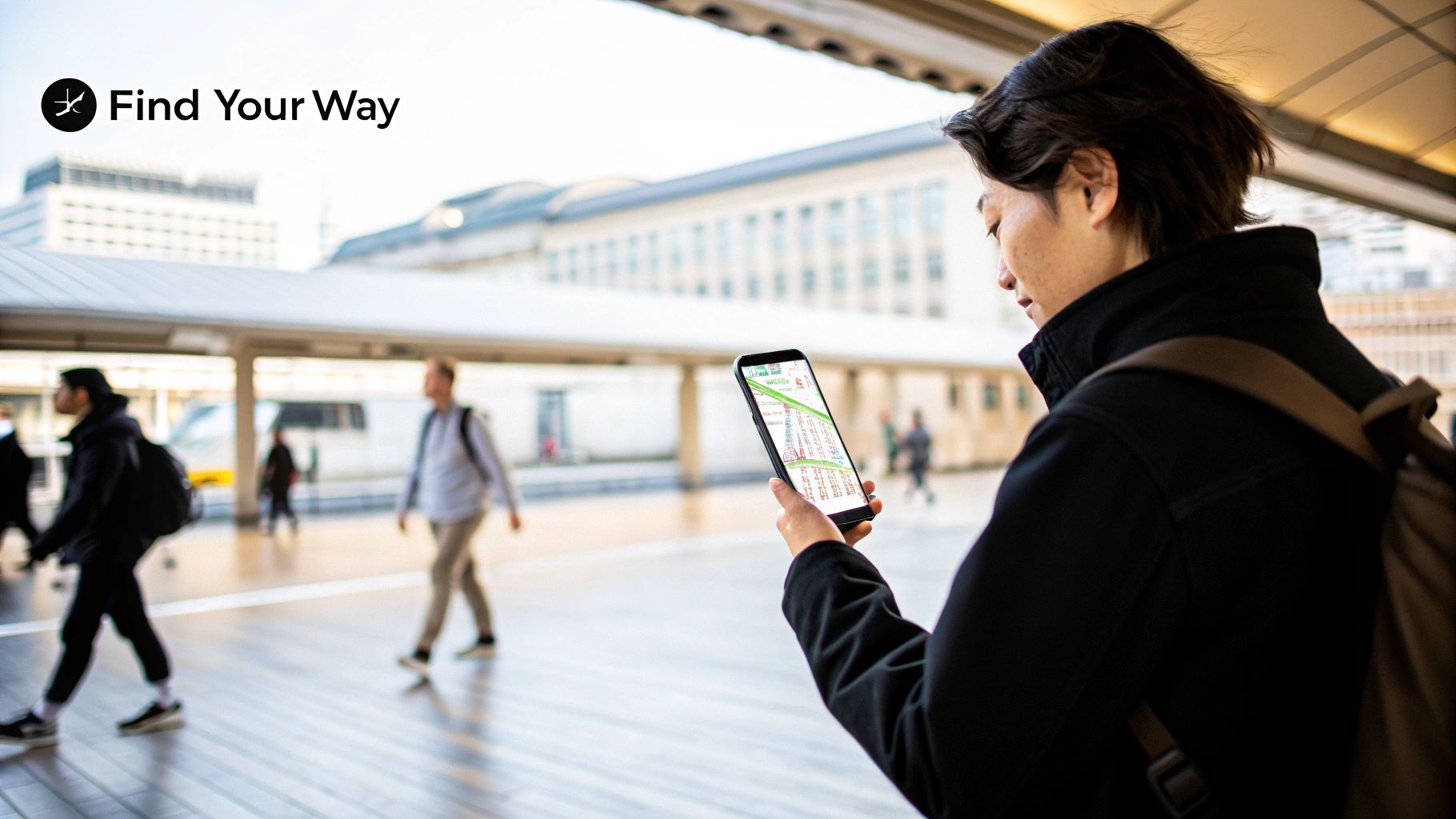
This dual-app approach is a lifesaver in massive, multi-level stations like Shinjuku, where GPS signals can be unreliable. Instead of just staring at a confusing map, you can ask a station attendant, “Excuse me, which exit is closest to the Omoide Yokocho?” and understand their detailed instructions perfectly. This method empowers you to navigate complex interchanges and find hidden gems with ease.
Practical Implementation
To effectively blend navigation with communication, follow these key steps:
- Ask Staff, Not Just GPS: In complex stations, trust station attendants over your GPS. Use your translation app to ask for the correct platform or exit number. They provide the most accurate, real-time information.
- Prepare for a Full Day: Navigating and translating drains your phone's battery. Always carry a fully charged portable power bank to ensure your tools are available when you need them most.
- Use Speaker Mode: In quieter station areas or when speaking with ticket booth staff, use your app's speaker mode. This allows both you and the person helping you to hear the translated conversation clearly.
- Have Connectivity Ready: A reliable internet connection is crucial for both live maps and translation. Ensure you have a plan in place before you land. For more insights on staying connected, explore our guide on how to get internet access while traveling abroad.
Your Pocket Translator for Japan
For seamless communication in these situations, having a reliable app is essential. The Translate AI app is designed for these exact scenarios, offering quick and accurate voice translation to help you navigate Japan like a local.
3. Order Authentic Japanese Cuisine Confidently at Local Restaurants
Japan’s dining scene is a core part of the travel experience, yet many visitors stick to tourist spots with English menus, missing out on authentic local flavors. Using a translation app is one of the best traveling to japan tips for unlocking genuine culinary adventures. It allows you to confidently visit local izakayas, ramen shops, and sushi counters where English is rarely spoken, letting you interact directly with chefs and staff.
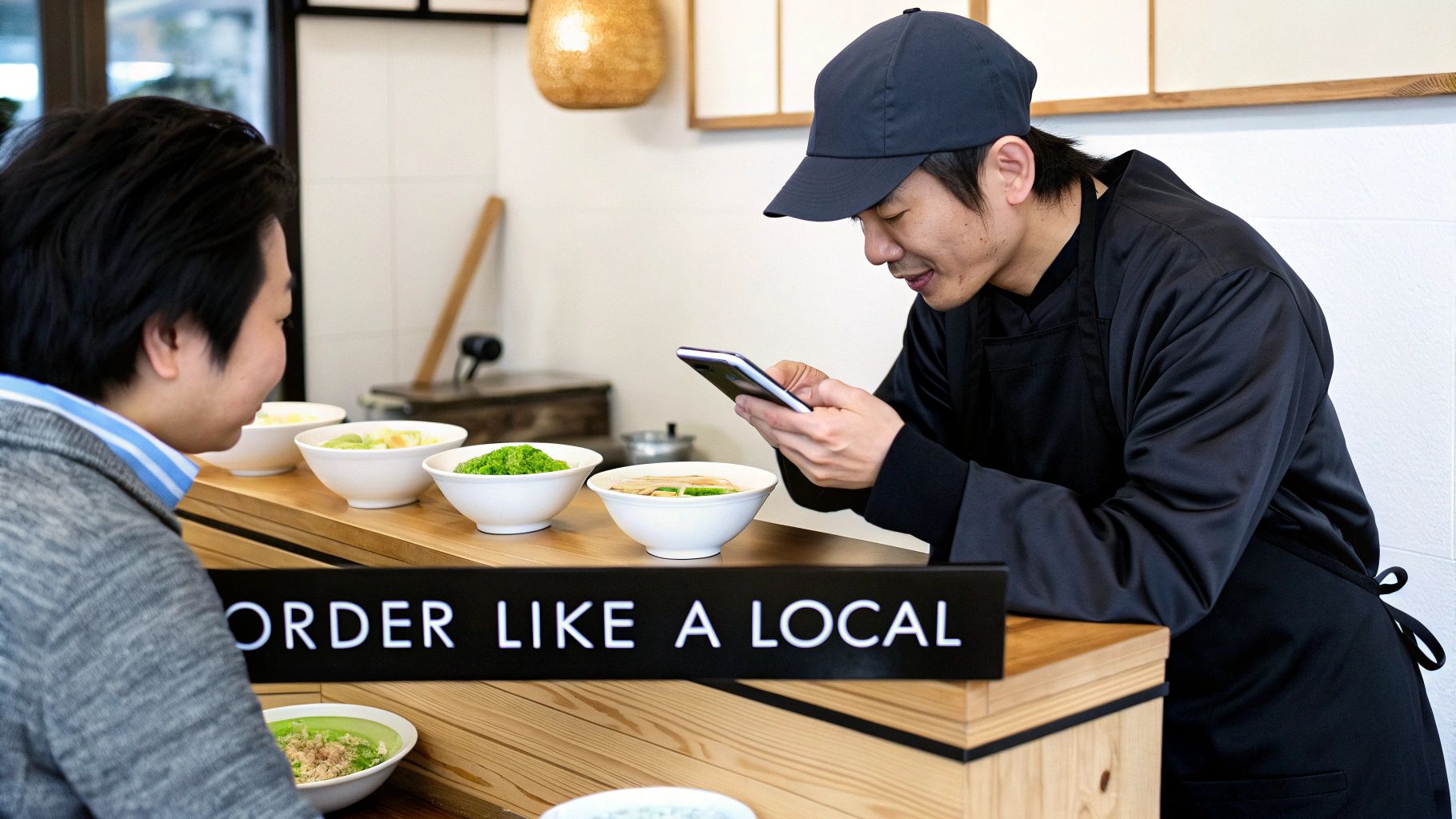
This technology empowers you to go beyond pointing at pictures. Imagine asking a ramen master for his personal broth recommendation, inquiring about the origin of the tuna at a Tsukiji sushi bar, or clearly communicating a vegetarian requirement at a traditional inn. These interactions transform a simple meal into a memorable cultural exchange.
Practical Implementation
To dine like a local without the language barrier, follow these simple steps:
- Ask for Recommendations: Instead of guessing, use your app to ask, "Osusume wa nan desu ka?" (What do you recommend?). This simple question often leads to the chef’s best and most popular dishes.
- Clarify Dietary Needs: Clearly communicate allergies or restrictions. A direct translation ensures your needs are understood, whether you're avoiding shellfish or requesting a meat-free okonomiyaki in Osaka.
- Learn About the Food: Take a photo of the menu and use the image translation feature to understand the dishes. You can also ask the staff about specific ingredients or regional specialties to deepen your appreciation for the cuisine. The Translate AI app offers reliable text and voice features perfect for these scenarios.
By leveraging technology, you can break free from the tourist trail and dive headfirst into Japan's incredible and authentic food culture, ensuring every meal is an adventure.
4. Communicate with Airbnb and Ryokan Hosts for Seamless Accommodations
Staying in local accommodations like a traditional ryokan or an Airbnb offers a uniquely authentic experience, but it can also present a language barrier. Many hosts have limited English, making clear communication essential for a smooth stay. This is one of the most practical traveling to japan tips for anyone looking to support local businesses over large hotel chains, as it ensures all details are understood. Using a real-time translation app bridges this gap, enabling clear dialogue about everything from check-in to local recommendations.
This technology allows you to handle specific, important conversations with ease. Imagine confirming your late arrival with a rural ryokan owner who only speaks Japanese or asking your Airbnb host for tips on the best nearby ramen spot that isn't in the guidebooks. A translation tool ensures these crucial interactions are simple and stress-free, preventing misunderstandings and enriching your stay.
Practical Implementation
To ensure seamless communication with your hosts, follow these actionable steps:
- Pre-Arrival Prep: Use the app to send a polite introductory message in Japanese before you arrive. This establishes a clear line of communication and shows respect.
- Create a Phrase List: Save translated phrases for common questions, such as "What is the Wi-Fi password?" or "How do I use the washing machine?" This saves time and makes interactions efficient.
- Ask for Recommendations: Leverage your host's local knowledge by using the app to ask for their favorite restaurants, cafes, or lesser-known attractions. This often leads to the most memorable travel experiences. To find a tool that fits your needs, you can review some of the best translation apps for travel before your trip.
This approach transforms potential communication issues into opportunities for connection, making your stay in local accommodations more comfortable and rewarding.
5. Engage with Local Communities and Make Meaningful Connections
One of the most rewarding traveling to japan tips is to move beyond tourist hubs and forge genuine human connections. Japan's culture is built on respectful interaction, but language often creates a barrier. Real-time translation tools dismantle this wall, allowing you to participate in local life rather than just observe it from a distance. This creates opportunities for profound cultural exchange and memories that last a lifetime.
Imagine discussing the philosophy behind a traditional tea ceremony with a practitioner, or chatting with vendors and families at a neighborhood matsuri (festival). These authentic interactions transform you from a passive tourist into an active participant in the local culture. It’s about creating shared moments, whether it's joining a calligraphy class or simply having a friendly conversation with the staff at a local konbini.
Practical Implementation
To foster these connections without being intrusive, follow these simple steps:
- Venture Off the Beaten Path: Explore residential neighborhoods and smaller towns. A simple greeting can open the door to a conversation at a local park or shop.
- Attend Community Events: Ask your hotel or host about local festivals, markets, or events. These are fantastic, welcoming environments for interacting with community members.
- Combine Respect with Technology: Always start with a polite Japanese greeting. Then, use a translation app to express your genuine interest in their craft, event, or story. Showing respect first makes the use of technology feel collaborative rather than distant.
- Listen Actively: Use your translation tool not just to speak, but to listen and understand. Ask open-ended questions and show you value their perspective. For seamless two-way conversations, an app like Translate AI can be invaluable.
By embracing this approach, you can experience the heart of Japan through its people, turning a great trip into an unforgettable one.
6. Handle Emergencies and Health Situations with Precise Translation
Medical emergencies or unexpected health concerns require absolute clarity, and a language barrier can create significant stress and risk. This is where precise, real-time translation becomes one of the most critical traveling to japan tips for your safety and peace of mind. Using a translation tool ensures you can accurately describe symptoms, allergies, and medical history to pharmacists, doctors, or emergency responders without vital information getting lost in translation.
This technology allows you to convey complex details with confidence. Imagine explaining a specific food allergy to a paramedic, describing the exact location and type of pain to a doctor in an emergency room, or understanding dosage instructions from a pharmacist for a prescription. These are high-stakes situations where accurate communication is not just helpful, it is essential for proper care.
Practical Implementation
To be prepared for a health-related issue, follow these key steps:
- Pre-load Your Health Profile: Before your trip, use your translation app to save crucial information like your blood type, known allergies, current medications, and any chronic conditions. This ensures the information is ready to be shown or spoken instantly.
- Know Emergency Numbers: Save Japan's emergency number, 119 (for both ambulance and fire), in your phone. You can use the app to communicate your location and the nature of the emergency to the operator.
- Speak Calmly and Clearly: In a stressful situation, it's important to speak slowly and clearly into the translator. This helps the app provide the most accurate translation for the healthcare professional to understand. You can prepare yourself by using an app like Translate AI to practice medical phrases before you even leave home.
This proactive approach turns a potentially frightening and confusing experience into a manageable one, ensuring you receive the correct medical attention when you need it most.
7. Negotiate and Shop at Local Markets and Department Stores
Japan's vibrant markets, department stores, and local shops offer unique products you simply won't find anywhere else. Engaging with vendors about prices, origins, and product details is part of the experience, but this often requires language skills. Using a translation app allows you to have meaningful conversations with shopkeepers about handmade crafts, antiques, and regional specialties, creating opportunities for better deals and more authentic souvenirs.
This technology empowers you to go beyond pointing and gesturing. Imagine discussing the history of an antique kimono at a Kyoto flea market or asking an artisan at a Takayama market about the specific wood used in their craft. These interactions transform a simple purchase into a memorable cultural exchange, making this one of the most enriching traveling to japan tips for shoppers.
Practical Implementation
To make your shopping experiences more rewarding, follow these key steps:
- Show Interest First: Before discussing price, use your translation app to ask about the story behind an item. Showing genuine appreciation for the craftsmanship builds rapport with the vendor.
- Ask for Recommendations: After a purchase, ask the shopkeeper for recommendations on other authentic local shops. This is a great way to discover hidden gems you wouldn't find in a guidebook.
- Arrive Early: Visit markets early in the day when vendors are setting up and are often less rushed. They are typically more open to having a longer conversation and explaining their wares. For seamless communication in these scenarios, an app like Translate AI can be invaluable.
This approach helps you connect with local artisans, find unique keepsakes, and gain a deeper understanding of Japanese culture through its commerce.
8. Participate in Cultural Activities and Classes with Local Instructors
Engaging in hands-on cultural activities like a tea ceremony or calligraphy class offers a profound connection to Japanese traditions. While many tourist-focused classes offer English guidance, using a real-time translation tool with a local, non-English-speaking master provides a far more authentic experience. This is one of the most rewarding traveling to japan tips for travelers seeking deep cultural immersion, as it unlocks the nuanced philosophies and techniques that are often lost in translation.
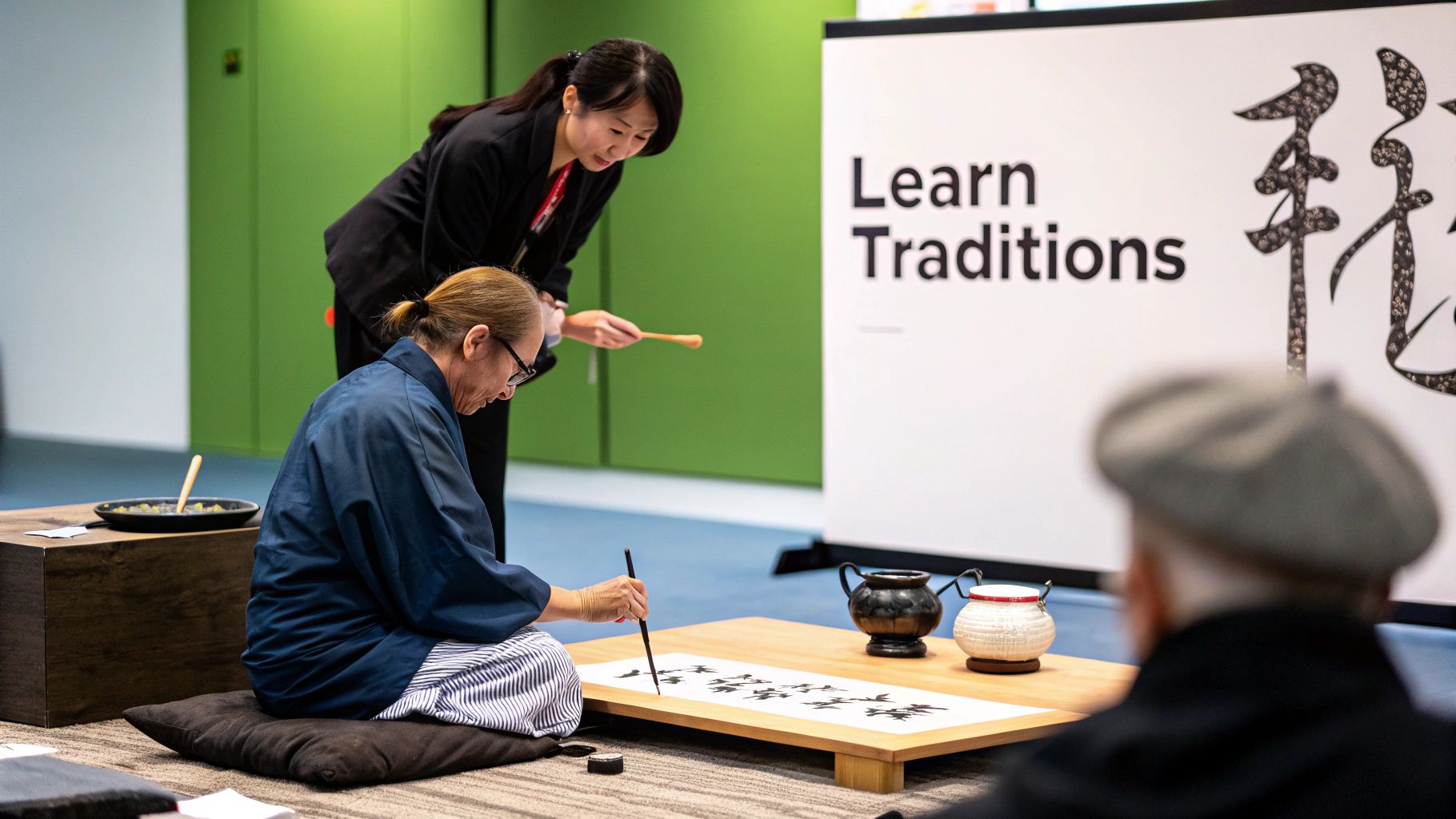
Imagine a shodo (calligraphy) instructor explaining not just the brush stroke, but the concept of mushin (no-mind) behind it, or a cooking teacher in Kyoto detailing the seasonal importance of each ingredient in a kaiseki meal. These conversations allow you to grasp the cultural significance and historical context, transforming a simple activity into a memorable lesson. A translation app facilitates this direct line of communication, ensuring you understand every detail.
Practical Implementation
To get the most out of these immersive experiences, follow these guidelines:
- Book in Advance: Use local tourism boards or online platforms to find and book authentic classes with local artisans and instructors, who may not be listed on major English-language tour sites.
- Go Beyond Technique: Use your translation tool to ask instructors about the "why" behind their craft. Ask about the philosophy, history, and cultural significance of the activity.
- Show Respect: Begin and end the class with polite Japanese phrases you know, like "Yoroshiku onegaishimasu" (Pleased to meet you/I look forward to working with you) and "Arigatou gozaimashita" (Thank you for what you did).
- Clarify Nuances: If a concept is complex, don't hesitate to ask follow-up questions. For seamless communication, an app like Translate AI can help you accurately phrase your inquiries and understand the detailed responses.
9. Conduct Business Meetings and Professional Networking
For professionals visiting Japan for conferences or business, precise communication is non-negotiable. Real-time translation is one of the most crucial traveling to japan tips for ensuring your ideas are presented clearly, terms are negotiated accurately, and professional rapport is built with Japanese colleagues and clients. It allows for nuanced discussions where understanding complex business concepts is key to success.
This technology moves beyond simple exchanges, empowering you to confidently pitch to investors, negotiate contract details, or network effectively at a conference in Tokyo. These high-stakes interactions demand a level of accuracy and speed that traditional methods cannot guarantee, ensuring that language differences do not hinder your professional objectives.
Practical Implementation
To integrate this technology effectively into your business engagements, follow these steps:
- Test and Prepare: Thoroughly test your translation app before any important meeting. Prepare a list of key business terminology specific to your industry to ensure the app recognizes and translates it correctly.
- Use Formal Language: When communicating, use formal and respectful language. While the app translates your words, your tone and choice of phrasing set a professional precedent.
- Have Backups Ready: Always bring written materials, like presentations or proposals, in both languages. This serves as a valuable backup and shows thorough preparation.
- Manage Meeting Time: Schedule meetings with extra time allocated for translation. This ensures conversations feel natural and unhurried, allowing for clear and thoughtful communication between all parties. For a reliable tool, consider using an app like Translate AI to handle these critical conversations.
10. Plan Personalized Itineraries Using Local Recommendations and Translation
While guidebooks offer a great starting point, they often lead to generic tourist experiences. One of the most rewarding traveling to japan tips is to create a truly unique itinerary by tapping into local knowledge. Using real-time translation allows you to ask for personalized recommendations based on your specific interests, uncovering the hidden gems that only residents know about.
This strategy empowers you to connect directly with accommodation hosts, shopkeepers, and community members. Imagine asking your ryokan owner about their favorite local onsen that isn't in the travel books, or getting a recommendation from a café barista for a nearby contemporary art gallery. These interactions lead to authentic experiences tailored perfectly to you, transforming your trip from a standard tour into a personal adventure.
Practical Implementation
To gather the best local insights for your itinerary, follow these steps:
- Ask Specific, Open-Ended Questions: Instead of asking "what's good here," try "What would you recommend for someone who loves traditional crafts?" or "Where is the best neighborhood to see cherry blossoms without the big crowds?"
- Engage with Various Locals: Don't just ask your hotel concierge. Chat with the person running a small noodle shop, a local artisan, or your Airbnb host. Each person offers a unique perspective.
- Be Prepared to Listen: Use your translation app to understand their suggestions clearly. Note down names of places and ask for help with pronunciation or directions, ensuring you can find these hidden spots later.
This approach of leveraging local wisdom through technology ensures your journey through Japan is uniquely yours, filled with memorable moments far off the beaten path.
10-Point Japan Travel Tips Comparison
| Item | 🔄 Implementation Complexity | ⚡ Speed / Efficiency | Resource Requirements | 📊 Expected Outcomes (⭐) | 💡 Ideal Use Cases & Key Advantages |
|---|---|---|---|---|---|
| Master Basic Japanese Phrases with Real-Time Translation | Low — install app, download packs | Immediate translation; ⚡ High | Smartphone, earbuds, optional internet/offline packs | Builds conversational confidence; broad language support; ⭐⭐⭐⭐ | Casual travel conversations, quick interactions; removes need to memorize phrases |
| Navigate Tokyo and Major Cities Using Live Navigation with Voice Translation | Medium — map integration + live 2‑way | Fast in-city guidance; ⚡ High | Smartphone, navigation app, internet, portable charger | Reduces navigation stress; clearer routing and local directions; ⭐⭐⭐⭐ | Complex stations, asking staff, multi-operator transit navigation |
| Order Authentic Japanese Cuisine Confidently at Local Restaurants | Low–Medium — voice in noisy environments | Moderate (noise can slow accuracy); ⚡ Moderate | Smartphone, earbuds/speaker, photos of menu, offline packs | Access to authentic dining and safe allergy communication; ⭐⭐⭐⭐ | Small eateries, izakayas, allergy-safe ordering, regional specialty discovery |
| Communicate with Airbnb and Ryokan Hosts for Seamless Accommodations | Medium — scheduling & detailed instructions | Moderate; ⚡ Moderate | Smartphone, video call capability, saved phrases, pre-arranged times | Smoother check-ins and clearer house rules; local recommendations; ⭐⭐⭐⭐ | Clarifying check-in, special requests, local tips; personalized stays |
| Engage with Local Communities and Make Meaningful Connections | Medium–High — group settings and etiquette | Variable (group dynamics); ⚡ Variable | Smartphone, speaker mode, cultural prep, comfort with vulnerability | Deeper cultural understanding and memorable interactions; ⭐⭐⭐⭐ | Festivals, community events, neighborhood conversations, long-term connections |
| Handle Emergencies and Health Situations with Precise Translation | High — medical accuracy and backup plans | Urgent response required; ⚡ High | Smartphone, saved health info, physical documents, emergency numbers, backups | More accurate symptom reporting and safer decisions; ⭐⭐⭐⭐ | Hospitals, pharmacies, emergency calls — vital safety tool (not sole backup) |
| Negotiate and Shop at Local Markets and Department Stores | Low–Medium — quick vendor exchanges | Fast for short interactions; ⚡ High | Smartphone, speaker/earbuds, photos of items, patience for bargaining | Better purchases, access to artisan stories, improved negotiation; ⭐⭐⭐ | Markets, artisan shops, flea markets — supports local sellers and informed buying |
| Participate in Cultural Activities and Classes with Local Instructors | Medium — detailed instruction and context | Moderate (may interrupt flow); ⚡ Moderate | Smartphone, pre-booking, notebook, permission to record | Deeper learning and personalized feedback; ⭐⭐⭐⭐ | Calligraphy, tea ceremony, martial arts, cooking classes — educational immersion |
| Conduct Business Meetings and Professional Networking | High — formal terminology and protocol | Moderate (allow extra time); ⚡ Moderate | Reliable app, backups, written materials, pre-tested terminology | Enables professional collaboration and clear negotiations; ⭐⭐⭐⭐ | Presentations, negotiations, networking — high-stakes formal communication |
| Plan Personalized Itineraries Using Local Recommendations and Translation | Low–Medium — conversational discovery | Variable (depends on time); ⚡ Variable | Smartphone, time flexibility, willingness to explore, note-taking | Tailored experiences and insider tips; avoids tourist traps; ⭐⭐⭐⭐ | Custom itineraries, hidden gems, host-recommended activities and routes |
Your Journey Starts with a Single Word
Embarking on a journey to Japan is often seen as a monumental undertaking, filled with intricate cultural nuances and a formidable language barrier. However, as we've explored, the path to a deeply immersive and stress-free adventure is more accessible than ever before. The core of these traveling to japan tips isn't just about what to see or where to go; it's about how you connect with the world around you. By moving beyond simple observation and into active participation, you transform your trip from a passive tour into a rich, personal story.
The key takeaways from our guide all circle back to one central idea: empowered communication. When you can confidently navigate a bustling Tokyo train station, order a specific ramen from a local shop owner, or share a laugh with a ryokan host, you are no longer just a visitor. You become part of the daily fabric of Japan. The true value lies not in simply getting by, but in the meaningful interactions these skills unlock. You're not just finding the right platform; you're experiencing the efficiency and order of the Japanese transit system firsthand. You're not just eating a meal; you're engaging with culinary artisans about their craft.
Bridging the Gap from Tourist to Traveler
The most crucial step you can take now is to shift your mindset from "how will I survive?" to "how can I connect?" The practical tips we've covered, from using real-time translation for ordering food to navigating with voice-guided directions, are the tools to build that bridge. Mastering these approaches is valuable because they eliminate the anxiety that so often holds travelers back, freeing you to be present, curious, and open to spontaneous discovery.
Here are your actionable next steps to ensure your trip is a success:
- Pre-load Your Tools: Before you even pack your bags, download a reliable translation app and familiarize yourself with its features. Practice using its voice and camera functions so it feels second nature upon arrival.
- Practice Key Phrases: Use your translation tool to learn and practice essential greetings like Konnichiwa (Hello), Arigatou gozaimasu (Thank you), and Sumimasen (Excuse me). Combining technology with personal effort shows immense respect.
- Create a "Communication Cheat Sheet": In your phone’s notes, save a few pre-written sentences for common scenarios, such as "Do you have an English menu?" or "Could you please point me toward the nearest subway station?" This prepares you for any situation.
Japan is a country that rewards curiosity and effort with unparalleled hospitality and unforgettable experiences. The tips provided are your launchpad, designed to give you the confidence to step off the beaten path and create your own unique narrative. The real journey begins not when your plane lands, but when you bravely utter your first word and open the door to genuine human connection. Japan is ready to welcome you.
Don't let language be a barrier to your dream adventure. Equip yourself with the ultimate communication tool by downloading Translate AI to turn complex conversations into simple exchanges. Visit Translate AI to prepare for your journey today.