

Buenos Dias En Ingles: How to Say Good Morning
Buenos dias en ingles is good morning, not good days. Good morning is the natural English greeting for that moment.
But if the translation is that simple, why does the clock mislead so many learners? You can know the words and still choose them at the wrong time, use them when you're leaving, or sound more formal than you meant to. The goal here is practical. You'll learn what the phrase means, how to say it clearly, when to switch to another greeting, and how to answer without pausing to translate word by word.
What Buenos Dias Means in English
Buenos dias means good morning. That is the answer to use in hotels, workplaces, shops, schools, and most first meetings during the morning.
Don't translate it word for word as good days. English speakers don't greet each other that way, so the literal version sounds like a wish for several days rather than a morning greeting. The Collins Spanish to English entry for buenos dias gives good morning as the standard equivalent, while its literal wording is closer to good days.
The core greetings side by side
| Spanish | English | When it fits |
|---|---|---|
| buenos dias | good morning | Standard morning greeting; the switch to buenas tardes varies by region and schedule |
| buen dia | good morning | Singular form used in the Rio de la Plata region and parts of the Americas |
| buenas tardes | good afternoon | Greeting once the afternoon begins, often after lunch |
| buenas noches | good evening or good night | Greeting in the evening, or a farewell before sleep |
| hola | hello | Safe fallback at any time of day when unsure |
Think about what the greeting does, not what each word means alone. In Spanish, buenos dias marks the time of day and opens the interaction politely. In English, good morning does the same job.
Translate the job of the phrase, not each word inside it.
That is why translating buenos dias en ingles as good days fails even though the individual words look correct. English already has a set phrase for this social moment, and native speakers expect that phrase.
You also don't need to add a verb. Good morning is complete by itself. You can add a name, a question, or a request after it, but you don't need to build a longer sentence to make the greeting correct.
For example, say Good morning, Ana when you arrive, or Good morning. Could you help me, please? when you need something. Both sound natural because the greeting opens the exchange and the next part carries your purpose.
The remaining question isn't meaning. It's timing, especially when morning ends and another greeting should take over.
How to Pronounce Good Morning Correctly
Start with the two standard versions. Cambridge pronunciation for good morning gives UK /ˌɡʊd ˈmɔː.nɪŋ/ and US /ˌɡʊd ˈmɔːr.nɪŋ/, with the main stress on MOR in morning.
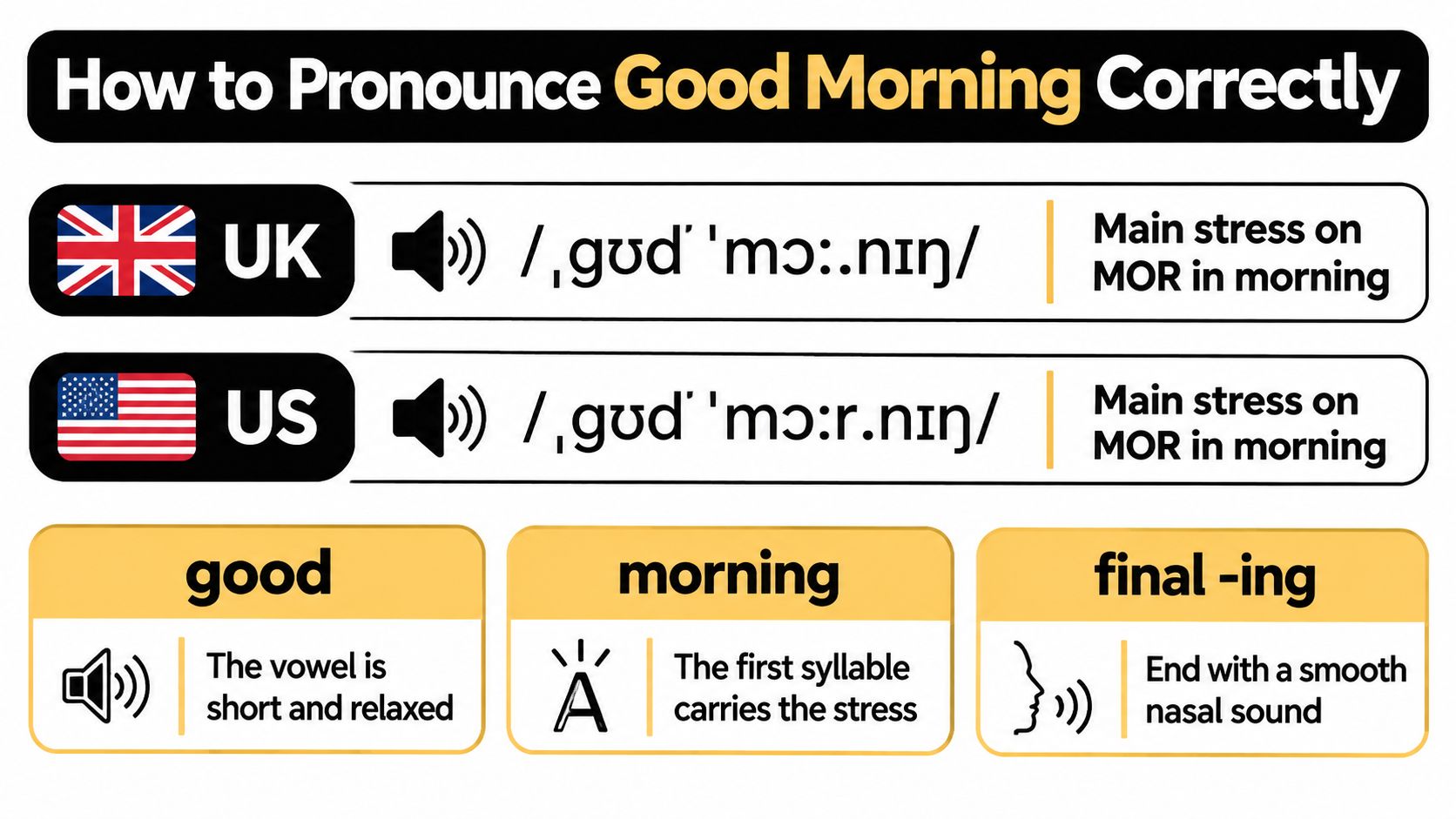
The vowel in good is short. It's the sound in foot, not the longer sound in food. Keep your lips relaxed and don't stretch the word.
The ending of morning is /ɪŋ/. Finish with the ng sound in sing, not a hard g. Your tongue shouldn't release a separate final sound.
American speakers usually pronounce the r in morning. Standard British pronunciation doesn't include that audible r. Neither version is wrong, so choose the one that matches the speakers you hear most often.
A short practice routine
- Say each word separately. Say good, then morning, so you lock in both shapes before joining them.
- Add a pause. Say good, morning slowly to stop the words running together too early.
- Join them at natural speed. Keep MOR clear because that stressed syllable carries the phrase.
- Record yourself. Listening back shows problems you may not notice while speaking.
- Compare two models. Listen to a UK speaker and a US speaker so you can hear the r difference.
- Check the ending. Confirm you didn't add a hard g after morning.
The most common slip is stretching good into a long oo sound. That pushes it toward food and makes the greeting sound less natural, even if people still understand you.
Aim for a simple result. You want two clear words, one main stress on MOR, and a soft nasal ending. If those three parts are in place, your good morning will sound calm and easy to understand.
Which Morning Greeting Fits the Moment
Context beats the clock. Buenos dias doesn't have a globally fixed cutoff, so the switch to buenas tardes depends on the country, the region, and the daily schedule around you.
The Real Academia Española guidance on buen dia and buenos dias states that buenos días is the general form and the only form used in Spain, while buen día alternates with it in the Americas and is especially established in the Río de la Plata region. For a morning greeting, either form normally becomes good morning in English.
Choose by situation
Use Good morning for a first greeting, a formal setting, a client, a teacher, or someone you don't know well. It's polite without sounding stiff.
Use Morning with colleagues or friends when the relationship is already relaxed. It's shorter and friendlier, but it can feel too casual in a formal first meeting.
Use Good morning, everyone when you open a class, meeting, or group call. The added word makes it clear you're addressing the whole room, not one person.
Use Hi or Hello when you're unsure whether the other person considers it morning or afternoon. If you want more options for Spanish openings, this guide to different ways to say hi in Spanish gives useful alternatives for those uncertain moments.
Practical rule: Listen to the greeting you receive near the boundary, then match it.
In English, keep saying good morning until good afternoon would naturally fit. That point can feel different from the Spanish switch, especially where lunch and workdays start later.
Saying buenas tardes too early can sound premature or overly formal. Continuing buenos dias a little later is usually understood and rarely causes offence. Don't panic if you choose slightly late, because listeners judge your intention as well as your timing.
Watch the end of an interaction, too. If someone uses a morning phrase while leaving, have a good day may be more natural in English than repeating good morning.
When you can't tell, use hola in Spanish or hello in English. A neutral greeting is better than a time specific greeting that feels wrong.
Example Sentences and Typical Replies
Real greetings rarely stand alone. You usually add a name, a small question, or the reason you're speaking, and the other person answers in a matching tone.

| Setting | English sentence | Typical reply |
|---|---|---|
| Hotel check-in | Good morning, I have a reservation under Smith. | Good morning, welcome. May I have your name, please? |
| Hotel check-out | Good morning, I would like to check out. | Good morning, of course. May I have your room number? |
| Casual meeting with a friend | Good morning! How is your day going? | Morning! Doing well, thanks. And you? |
| Office stand-up | Good morning, everyone. Let us start. | Good morning. Ready when you are. |
| Business email opening | Good morning, Ms. Lopez, thank you for your time. | Good morning, glad to help. What do you need? |
| Customer service call | Good morning, how can I help you? | Good morning, I have a question about my order. |
The pattern behind the examples
The pattern is good morning plus one useful next step. That next step might be a name, as in Good morning, Ms. Lopez, a friendly question, or a direct request.
This structure helps because the greeting acknowledges the person before you ask for anything. At a hotel desk, Good morning, I would like to check out sounds smoother than starting with the request alone.
Replies follow three common paths. The other person may return the same greeting, shorten it to Morning, or answer the greeting and move straight into the task. All three are normal, and the setting decides which one fits.
Casual replies can be brief because the relationship carries the warmth. Business replies often add a name, a welcome, or a thank you because the speaker needs to signal attention and respect.
If you're practising these exchanges with children at home, at-home phrase practice with Talkio Kids can help you repeat short greetings in simple daily routines. Adults can use the same idea by rehearsing one hotel or office exchange out loud.
You may also hear a follow up question after the greeting. If you're unsure how to handle that next step in Spanish, this explanation of what como estas means in English will help you connect the greeting to the reply.
Match the tone you receive. A formal good morning deserves a complete, polite reply, while a cheerful Morning! from a friend doesn't need a formal answer.
Common Mistakes to Avoid
Most mistakes with buenos dias en ingles don't come from poor memory. They come from translating too directly or carrying Spanish timing into English without checking the moment.
- Saying good days. This happens when you translate each word separately, so use good morning instead because that's the natural English greeting.
- Saying good morning in the afternoon. Spanish timing may have influenced your choice, so switch to good afternoon once the afternoon has clearly started.
- Using good morning as a farewell. English speakers hear it mainly as an opening greeting, so say have a good day when you're leaving.
- Confusing buenas noches with a morning greeting. The context is evening or night, so use good evening when you arrive and good night when someone is leaving or going to sleep.
- Skipping the greeting and starting with a request. This can sound abrupt in a shop, hotel, or office, so open with good morning before you ask for help.
- Sounding too formal with friends. A full, careful greeting can feel distant with people you know well, so use Morning or Hi when the relationship is casual.
Notice the pattern. Every fix asks you to check one of two things, the time of day or your relationship with the listener. You don't need more vocabulary to solve most of these problems.
One habit that prevents most errors
Pause for one second before you speak. Ask yourself whether you're arriving or leaving, and whether this is a formal or casual moment.
Check the moment first, then choose the phrase.
That tiny pause stops direct translation from taking over. You'll still make occasional timing mistakes near midday, but they'll be minor because your greeting will match the purpose of the interaction.
If you're unsure, choose the safer neutral option. Hello works when the time feels unclear, and have a good day works when you're clearly saying goodbye.
Practice Your Greetings With a Live Translator
You don't need a long study session to make good morning automatic. You need short, repeated practice tied to a situation you'll face.
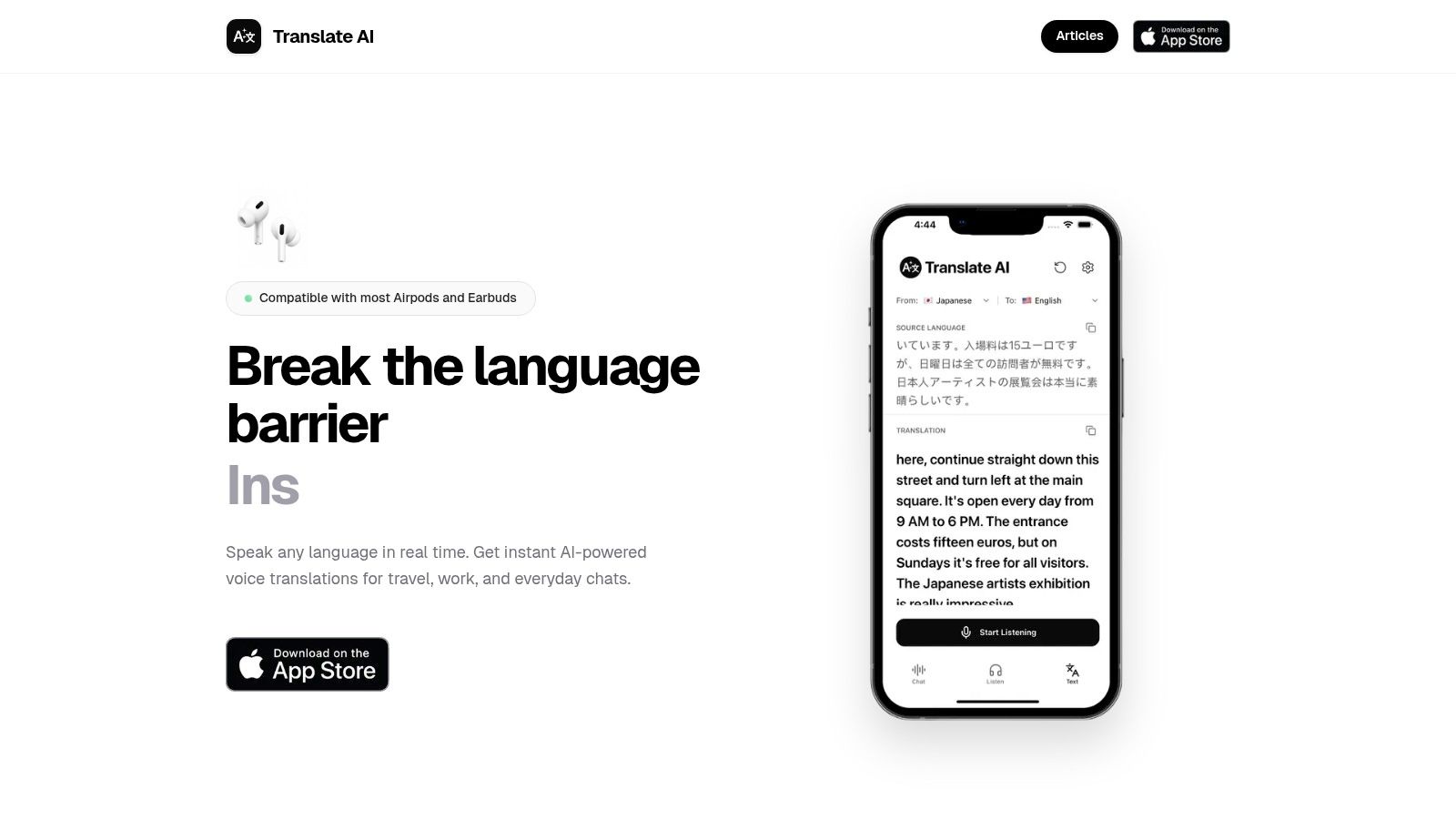
The screenshot below shows the kind of live translation view you can use while rehearsing a short exchange.
- Learn three core phrases. Start with good morning, buenos dias, and hello so you always have a morning option and a neutral fallback.
- Say each phrase out loud ten times. Repetition builds muscle memory, and hearing your own voice makes the phrase easier to use with another person.
- Role play a hotel check-in. Use the sentence and reply from the examples, then swap roles so you practise both opening and answering.
- Use a live translator for comparison. Hear the phrase in context, repeat it, then compare your version with the playback.
Clear audio matters during step four because small sound differences are hard to judge from a noisy recording. If your phone clips soft endings or picks up room echo, this guide to improve your phone's microphone recordings can help you get a cleaner take before you compare versions.
For a broader speaking routine beyond greetings, these ideas on how to practice speaking English can help you turn one phrase into a daily habit.
Try It With Translate AI
Translate AI is a live voice translation app for real time conversation. It supports 80+ languages including English and Spanish, so you can practise hearing buenos dias become good morning in a spoken exchange.
The app offers two-way dialogue, which means each person hears the translation in their own language. It works with any earbuds or AirPods, and speaker mode lets you keep the conversation hands free when you're not using earbuds.
You can get it through Translate AI on the App Store or learn more on the Translate AI website. The short video below shows how a live exchange can flow without passing a phone back and forth for every line.
Choose one greeting for tomorrow morning now. Use it with the first person you meet, whether that's a colleague, a neighbour, a hotel receptionist, or a friend, and notice which reply you get back.
When you want to hear buenos dias en ingles in a real conversation and answer without delay, Translate AI gives you live two way voice translation between Spanish and English and more than 80 other languages. Visit today, choose your languages, and practise your first good morning exchange before you need it at a hotel desk, in a meeting, or on the street.