

The 12 Best Language Exchange Apps for Fluent Conversations in 2026
You've spent hours with flashcards and grammar drills, building a solid foundation in a new language. But when you try to speak with a native, the words get stuck, and the conversation feels awkward. You know the vocabulary, but you can't seem to make it flow. This is a common and frustrating problem for language learners. The solution isn't more theory; it's consistent, real-world practice.
This guide is built to solve that exact problem. We will cut through the noise and give you a clear, actionable breakdown of the 12 best language exchange apps and platforms. Our goal is to help you find the right tool to start having real conversations today, so you can finally move from knowing a language to speaking it confidently.
We’ll analyze each app's key features, who it's best for, and its pros and cons. You'll find direct links and screenshots to help you choose quickly. By the end of this article, you will have a clear plan to start speaking your target language. Let’s find the right partner for your language journey.
1. Tandem
Tandem secures the top spot as one of the best language exchange apps by creating a vibrant, peer-to-peer community focused on authentic conversation. It connects millions of users with native speakers across more than 300 languages, including several forms of Sign Language (ASL). The platform's strength lies in its comprehensive toolset designed to facilitate real learning within a chat interface.
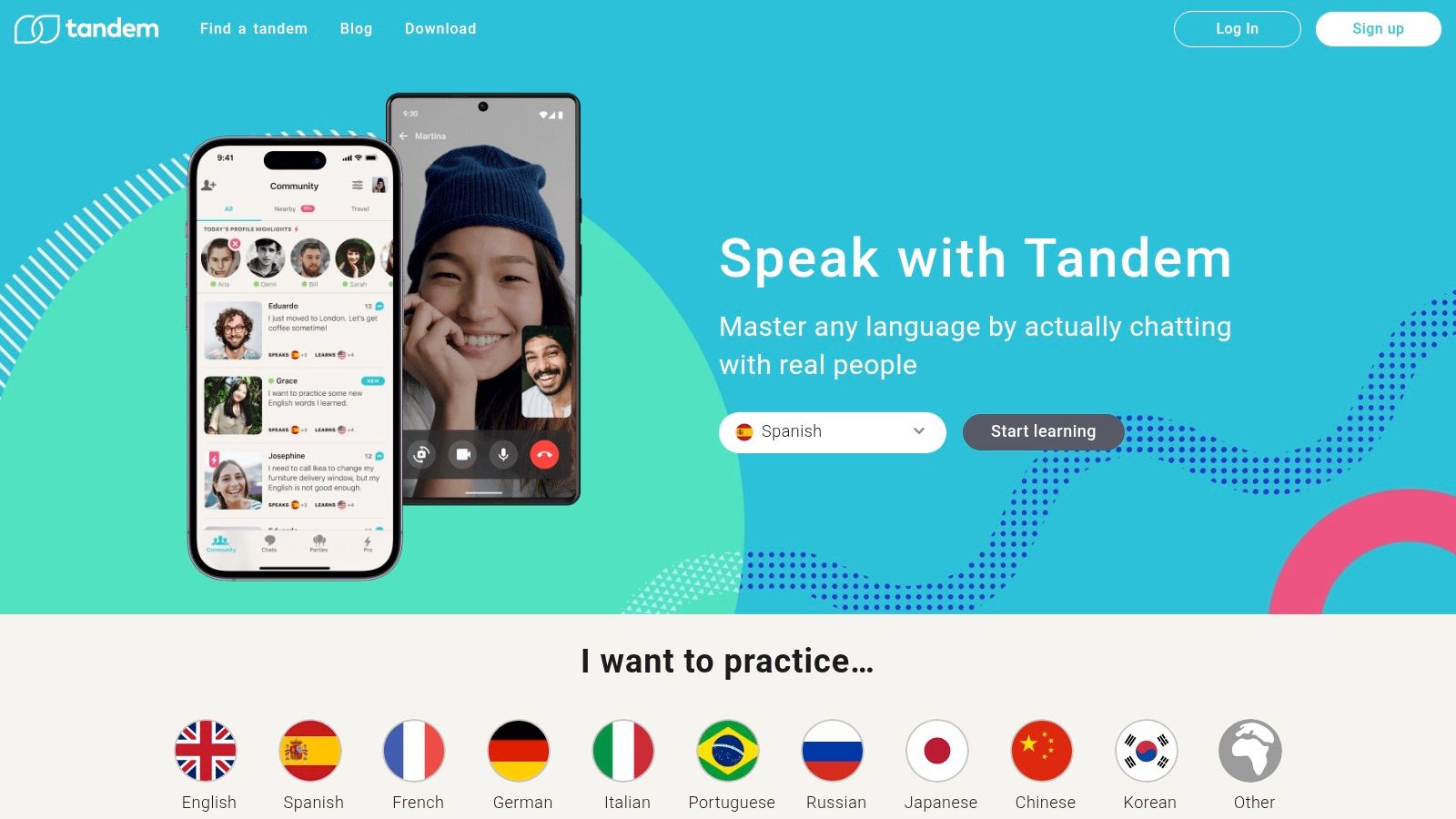
Unlike simple chat apps, Tandem integrates features like in-line translation, message correction, and voice notes directly into the conversation. This allows your partner to correct your mistakes in real-time without disrupting the flow. The transition from text to audio or video calls is seamless, offering a natural progression as your confidence grows. These features are particularly useful for enhancing your real-time conversation skills, a key component of language mastery. For more strategies on this, you can explore tips to improve listening comprehension.
Core Features & User Experience
Tandem emphasizes safety with a mandatory profile review process, which helps cultivate a community of serious learners. While the core experience is free, Tandem Pro (starting around $13.99/month) unlocks advanced features like unlimited translations and finding partners in a specific city. The user interface is clean and intuitive, though some users report occasional glitches.
- Best For: Intermediate learners seeking consistent, real-world practice with native speakers.
- Platforms: iOS, Android, Web
- Pros: Strong community moderation, excellent built-in learning tools, massive user base.
- Cons: Key features are paywalled, the matching algorithm can sometimes feel random.
Find it on the web at tandem.net.
2. HelloTalk
HelloTalk stands out as one of the best language exchange apps by transforming language practice into a multifaceted social experience. It supports over 260 languages and connects a massive, active community of learners and native speakers. The app moves beyond simple one-on-one chats, offering dynamic group "Voicerooms" and livestreams where users can drop in to listen or participate in real-time conversations, creating an immersive and community-driven learning environment.
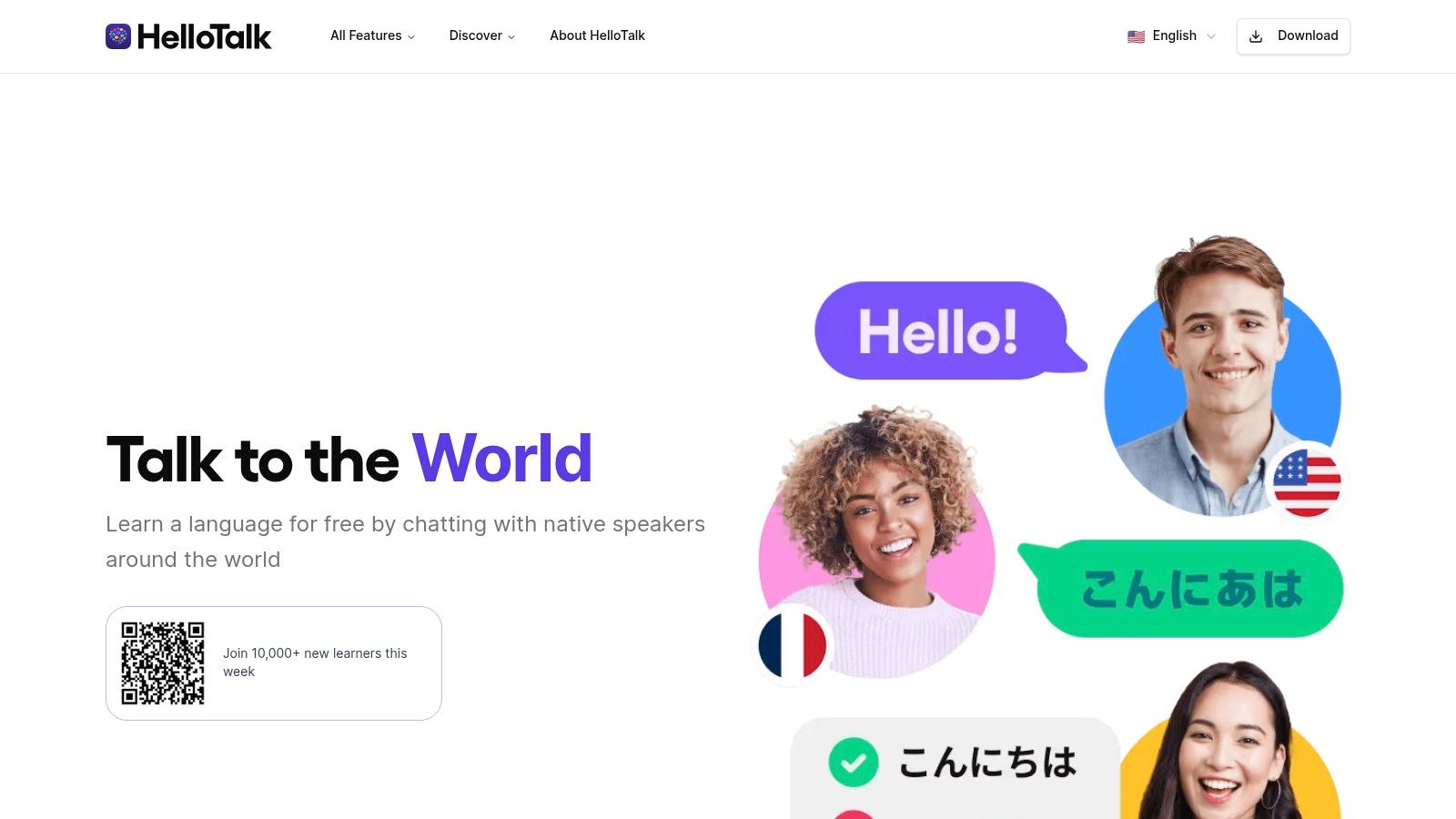
Its strength lies in the powerful AI-aided learning tools integrated directly into the chat. Features like instant translation, transliteration for different scripts, and text-to-speech help learners understand and pronounce new words correctly. The social media-style "Moments" feed allows users to share updates with the entire community, getting corrections and feedback from multiple native speakers at once. This public practice can significantly boost your conversational skills by exposing you to diverse feedback.
Core Features & User Experience
HelloTalk's interface feels like a blend of a messaging app and a social network, which can be engaging but potentially distracting for users seeking a more focused experience. The free version is quite generous, but a VIP subscription (starting around $12.99/month) is needed to unlock unlimited translations and access more advanced features. The platform’s large user base means finding a partner is almost always instantaneous.
- Best For: Learners of all levels who enjoy a social, community-based approach with multiple ways to practice.
- Platforms: iOS, Android, Web
- Pros: Enormous and active user base, multiple practice modes (1:1, groups, livestreams), powerful built-in language tools.
- Cons: The busy, social-media interface can be overwhelming; many key features require a VIP subscription.
Find it on the web at hellotalk.com.
3. Speaky
Speaky positions itself as a social network for language learners, emphasizing quick connections and straightforward practice. It strips back some of the more complex features of other platforms to focus on the core exchange: connecting you with partners in over 180 countries and 110 languages. Its design prioritizes immediacy, allowing users to quickly find online partners and start a text or audio chat without a lengthy setup process, making it one of the more accessible language exchange apps.
The platform operates much like a simplified social media feed, where you can browse potential partners who are currently online and filter them by native or learning languages. Speaky integrates basic but useful tools directly into its chat interface, including a simple correction feature and an in-line translator. These functions are designed to keep the conversation moving smoothly, which is essential when you're trying to build conversational fluency. For additional strategies on maintaining momentum in your conversations, you can find valuable advice on how to practice speaking English effectively.
Core Features & User Experience
Speaky’s primary appeal is its simplicity and the fact that its core functionality is completely free. The user interface is clean on both web and mobile, focusing on the chat experience. However, community moderation is less stringent compared to platforms like Tandem, so users may encounter a wider range of partner intentions. A premium subscription is available, which removes ads and offers an unlimited number of translations.
- Best For: Beginners and casual learners looking for quick, low-pressure text and audio practice.
- Platforms: iOS, Android, Web
- Pros: Very easy to get started, large and active user base, core features are free.
- Cons: Less structured learning environment, community moderation can be inconsistent.
Find it on the web at web.speaky.com.
4. Lingbe
Lingbe carves out its niche among the best language exchange apps with a unique "on-demand" approach to conversation. Instead of scheduling calls or scrolling through profiles, you simply tap a button to be instantly connected with a native speaker for a spontaneous voice chat. This audio-first model is designed to eliminate hesitation and get users speaking immediately, focusing entirely on real-time conversational practice.
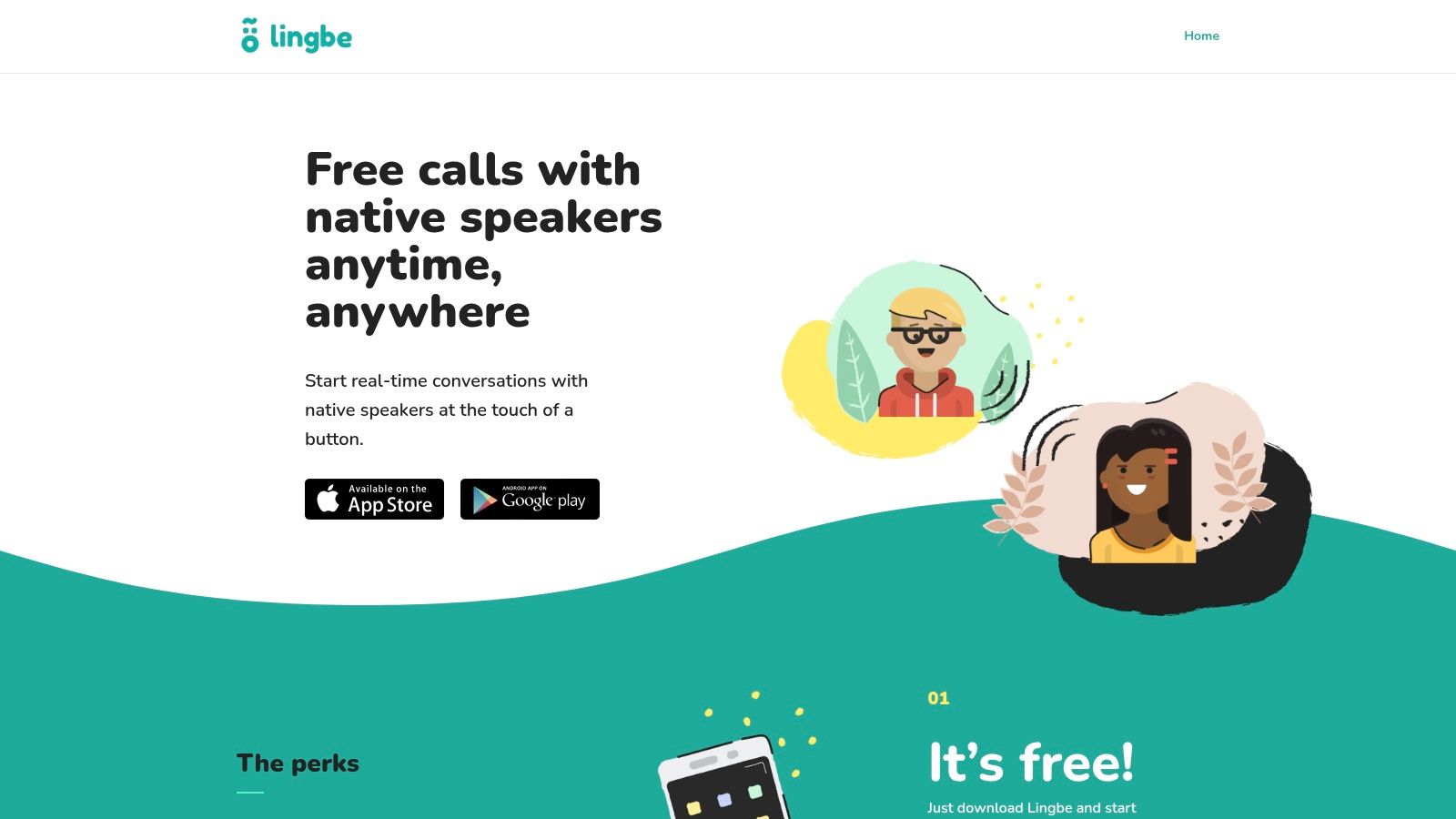
The platform operates on an innovative in-app economy. Users earn currency ("Lingos") by helping others learn their native language, which they can then spend on practice calls for their target language. This creates a reciprocal and gamified system that encourages active participation. The focus remains squarely on speaking and listening, making it an excellent tool for learners who need to overcome the fear of speaking aloud and build conversational fluency without the pressure of video or text.
Core Features & User Experience
Lingbe’s interface is minimalist and purpose-built for its core function: connecting users for voice calls. The user experience is straightforward, though the reliance on earning or purchasing Lingos for extended talk time might not appeal to everyone. Premium plans (starting around $5/month) offer more talking time and features. The app successfully lowers the barrier to entry for speaking practice, making it feel more like a casual phone call than a formal lesson.
- Best For: Learners at all levels who want to overcome speaking anxiety with quick, low-pressure voice chats.
- Platforms: iOS, Android
- Pros: Instant connection for spontaneous speaking practice, gamified rewards system encourages participation, excellent for building verbal confidence.
- Cons: Audio-only format isn't ideal for visual or text-based learners, free practice time is limited by the need to earn or buy credits.
Find it on the web at lingbe.com.
5. HiNative
HiNative carves out a unique niche among the best language exchange apps by operating as a global Q&A platform rather than a direct chat service. Developed by the team behind Lang-8, it connects learners with native speakers to get answers to specific, nuanced questions about language and culture. Instead of finding a long-term partner for conversation, you can quickly ask things like, "Does this sound natural?" or "What's the difference between these two words?"
The platform’s strength is its focused, community-driven support. You can upload audio recordings to get pronunciation feedback or submit short texts for corrections from multiple native speakers. This format is incredibly efficient for solving the small, specific roadblocks that often come up during self-study. It serves as an excellent supplement to more conversation-focused apps, providing on-demand clarity when you need it most.
Core Features & User Experience
HiNative's interface is built around pre-formatted question templates, making it easy to ask for translations, definitions, or pronunciation checks. The community is generally very active and responsive, with answers often appearing within minutes. While the core Q&A functionality is free, a premium subscription (starting around $5.68/month) is needed to play all audio answers or use advanced search features.
- Best For: Learners at all levels needing quick, specific answers to usage, pronunciation, or cultural questions.
- Platforms: iOS, Android, Web
- Pros: Fast answers from a large community of native speakers, excellent for targeted learning and pronunciation checks.
- Cons: Not designed for live conversation or finding exchange partners, some key features require a premium subscription.
Find it on the web at hinative.com.
6. Hilokal
Hilokal offers a unique, social-audio approach to language exchange, positioning itself as a platform for live, drop-in conversations. Instead of one-on-one text chats, it centers around audio "tables" or "cafes" where users can gather to discuss specific topics or simply practice speaking. This model lowers the barrier to entry, allowing learners to join rooms as listeners first, absorbing the conversation before feeling pressured to participate.
The platform is particularly popular for certain language pairings, such as Korean and English, fostering large and active communities. This group-based learning environment is excellent for overcoming speaking anxiety and improving listening skills in a more natural, "party line" style setting. The mobile app further enhances the experience with integrated AI tutoring features, providing a modern supplement to its community-driven core. While a fantastic tool for speaking, users seeking a robust live translation tool for immediate communication needs might find dedicated apps more suitable.
Core Features & User Experience
Hilokal's interface is designed around finding and joining live audio rooms, which are organized by language, topic, and level. The user experience is straightforward, though the web version is more limited compared to the feature-rich mobile app. The free version provides ample access to the core experience, but a premium subscription unlocks features like creating private tables and accessing advanced AI tools. The quality of conversation can vary significantly depending on the room host and active participants at any given time.
- Best For: Learners who want to overcome speaking anxiety by listening first in a group setting.
- Platforms: iOS, Android, Web
- Pros: Low-pressure audio environment, active communities for popular languages, excellent for listening practice.
- Cons: Experience is better on mobile than web, room quality can be inconsistent.
Find it on the web at web.hilokal.com.
7. MyLanguageExchange
MyLanguageExchange takes a more traditional, academic approach to language exchange, positioning itself as a community for serious learners seeking structured practice. Established long before the modern app boom, it connects users for pen-pal correspondence, text, voice, and even in-person exchanges. Its unique proposition lies in its provided lesson plans and guides, which help partners structure their conversations for maximum learning, moving beyond simple chit-chat.
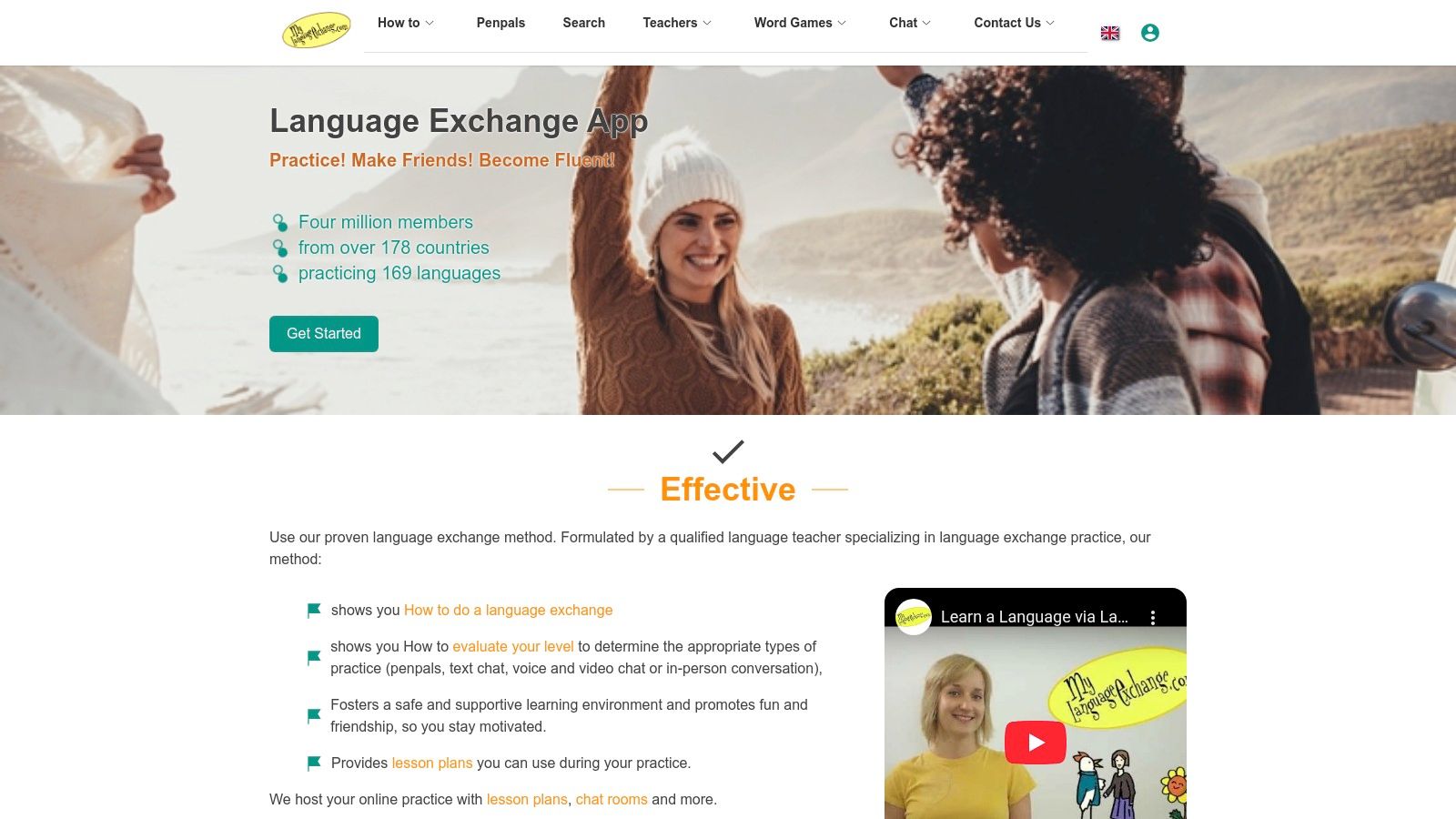
This platform operates primarily through its website, making it accessible on both desktop and mobile browsers without requiring an app installation. The focus is less on social discovery and more on deliberate connection. Users can search for partners by language, country, and even city, which is a great feature for those looking for in-person meetups. The community is well-established, with many long-term members dedicated to the mutual exchange of knowledge.
Core Features & User Experience
While the interface can feel dated compared to slick, modern apps, its functionality is straightforward. The core service is free, but to initiate contact with a non-paying member, you need a Gold Membership (starting around $6/month). This model helps filter for committed learners. The platform's built-in text and voice chat tools are basic but effective for direct communication once you've found a partner.
- Best For: Dedicated learners who prefer a structured, pen-pal style of exchange and value guided practice over spontaneous chat.
- Platforms: Web
- Pros: Large, established community of serious learners, provides lesson plans and structured guides, no app required.
- Cons: Outdated user interface, many users are behind a paywall, lacks the instant-chat features of modern apps.
Find it on the web at mylanguageexchange.com.
8. ConversationExchange
ConversationExchange carves out its niche by taking a more traditional, community-board approach to language exchange. Rather than a sleek app interface, it functions as a comprehensive directory connecting users who want to practice via correspondence (pen-pals), online chat, or even face-to-face meetings. This focus on user-driven connection makes it one of the best language exchange apps for learners who prefer to set their own pace and method of interaction without algorithmic matchmaking.
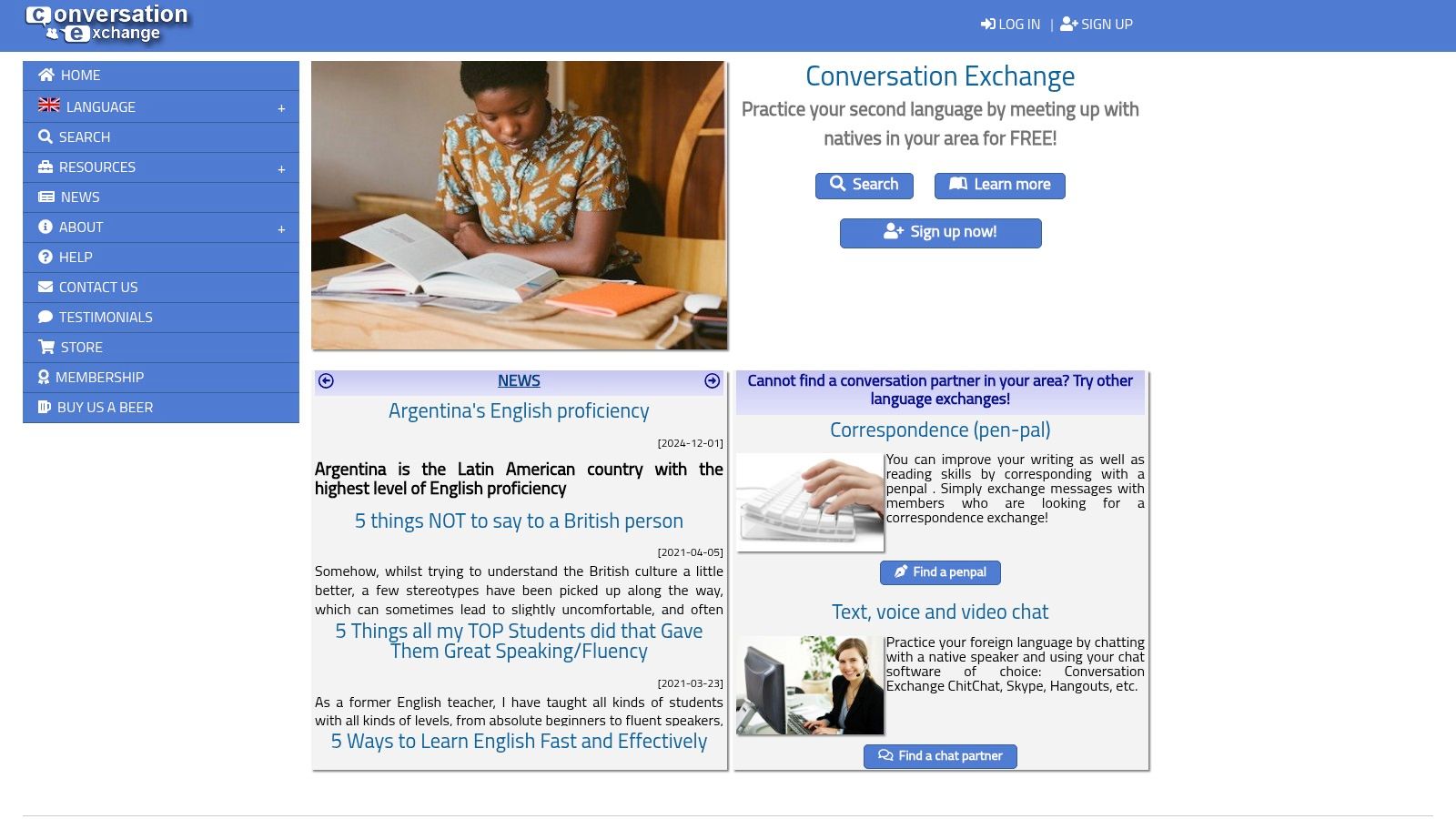
The platform’s strength is its simplicity and the freedom it offers. Users create a profile, specify their native and target languages, and then search a global database of like-minded individuals. You can filter partners by country, city, and preferred exchange type, which is particularly useful for expats or travelers looking to arrange in-person practice sessions. While it lacks the integrated translation and correction tools of more modern apps, its straightforward design encourages more deliberate and thoughtful communication from the outset.
Core Features & User Experience
ConversationExchange is entirely free, which is a significant advantage. The user interface is basic and web-focused, feeling more like a forum from the early 2000s than a modern social app. This requires more initiative from the user to vet partners and arrange conversations, as there are no built-in chat or video call functions. Users must exchange contact details and move to external platforms like Skype or WhatsApp.
- Best For: Self-motivated learners and travelers seeking in-person meetups or traditional pen-pal exchanges.
- Platforms: Web only
- Pros: Completely free to use, excellent for arranging face-to-face meetings, diverse user base.
- Cons: Outdated interface, no integrated communication tools, requires moving to third-party apps.
Find it on the web at conversationexchange.com.
9. Language.Exchange
Language.Exchange carves out a niche in the digital landscape by offering a straightforward, web-based platform for finding language partners. It functions like a classic pen-pal bulletin board, reimagined for the internet age. This approach makes it one of the best language exchange apps for users who prefer not to install another mobile application and want a simple, no-frills method for connecting with native speakers around the world.
The platform's standout feature is its powerful yet simple search filter, allowing you to find partners by language, country, and even specific cities, with a notable number of profiles in various US locations. Instead of containing users within a proprietary chat system, it encourages members to connect using their preferred external tools like Skype, WhatsApp, or email. This freedom allows for more flexible and immediate communication once a good match is found, though it places the responsibility for managing the exchange entirely on the users.
Core Features & User Experience
As a completely free service, Language.Exchange provides an accessible entry point for learners. The user interface is minimalist and highly functional, prioritizing browsing and searching over integrated tools. While it lacks the built-in translation and correction features of its app-based competitors, its direct approach appeals to those seeking a quick and uncomplicated way to find a study buddy or pen pal without a lengthy sign-up process.
- Best For: Self-starters and learners who prefer a simple, browser-based directory to find partners and manage their own communication.
- Platforms: Web
- Pros: Entirely free to use, powerful city-specific search filters, no app installation required.
- Cons: Lacks integrated communication tools (voice/video/chat), smaller user base than major apps, basic interface.
Find it on the web at language.exchange.
10. InterPals
InterPals stands as one of the original and largest pen-pal communities on the web, predating many modern apps. Its focus is less on instant chat and more on fostering deeper connections through written correspondence and cultural exchange. With a massive global member base, it operates like a social network for those seeking friends, travel partners, and language practice partners from around the world. Its strength lies in its sheer size and its traditional, community-driven approach to connecting people.
Unlike algorithm-driven apps, InterPals gives users full control with detailed search filters. You can find partners by country, age, gender, languages spoken, and even specific interests. This makes it excellent for finding someone who not only speaks your target language but also shares your hobbies. The platform is entirely free to use, making it one of the most accessible options for language learners who prefer to develop their writing and reading skills before diving into live conversation.
Core Features & User Experience
The platform is primarily web-based, though it has an official mobile app. The user interface can feel dated compared to newer apps, and the community is less formally moderated. This means users must be proactive in managing their safety and filtering through profiles to find serious learners. However, its long-standing reputation means you can find dedicated partners for long-term exchanges. The free model and large user base make it a valuable resource among the best language exchange apps.
- Best For: Learners who prefer written correspondence and making long-term cultural connections.
- Platforms: Web, iOS, Android
- Pros: Massive and well-established global community, completely free to use, great for finding pen-pals.
- Cons: Outdated interface, requires users to self-manage safety and filtering.
Find it on the web at interpals.net.
11. Meetup (Language Exchange groups)
Meetup takes language exchange offline and into the real world, distinguishing itself from purely digital platforms. Instead of one-on-one matching, it functions as an event platform where you can find in-person and virtual language exchange events organized in your local area. This approach is ideal for learners who crave face-to-face interaction and want to build a local community of fellow speakers and learners, making it a unique player among the best language exchange apps for real-world practice.
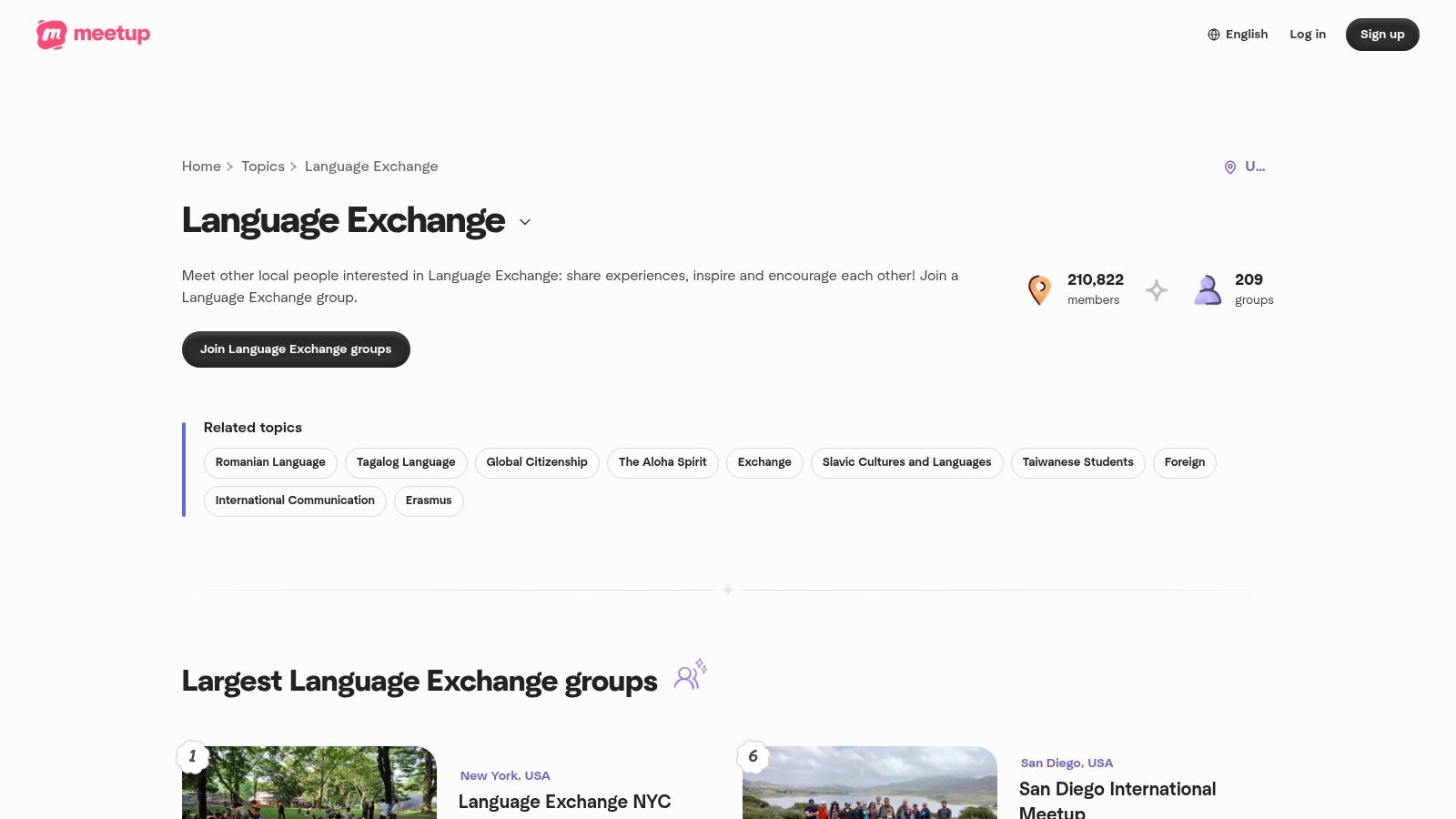
The platform lists recurring group events for numerous languages across various cities, allowing you to practice in a relaxed, social setting like a café or park. The focus is less on structured lessons and more on organic conversation, which can significantly boost conversational fluency and confidence. You can easily browse groups, RSVP to events, and connect with other members, providing a low-pressure way to immerse yourself in a new language and culture.
Core Features & User Experience
Using Meetup is straightforward: you search for a language exchange group in your city, join, and attend events. While the platform itself is free to use for attendees, some individual organizers may charge a small fee to cover costs or for their time. The quality and frequency of meetups depend entirely on the local organizers, so experiences can vary. It lacks the integrated translation or correction tools of dedicated apps, putting the emphasis purely on live interaction.
- Best For: Learners of all levels seeking in-person, group-based conversation practice and community.
- Platforms: iOS, Android, Web
- Pros: Excellent for real-world practice and meeting local partners, easy to try different groups.
- Cons: Event quality varies by organizer, not a dedicated language-learning app with built-in tools.
Find it on the web at meetup.com/topics/language-exchange/us/.
12. Reddit – r/language_exchange
While not a dedicated app, Reddit's r/language_exchange community is a massive, grassroots hub for finding language partners. It functions as a classifieds board where users post what language they offer and what they are seeking, creating a completely free and flexible way to connect. Its power lies in its sheer size and the specific, niche connections you can make, often leading to long-term partnerships on other platforms like Discord or Telegram.
The subreddit relies on user-driven posts rather than an algorithm. This manual approach means you have full control over who you contact, allowing you to find partners with shared interests, professional backgrounds, or specific dialects. The community is active and well-moderated, with clear rules and post templates to streamline the search process. It’s an excellent starting point if you prefer to vet partners yourself before committing to a conversation.
Core Features & User Experience
The experience is straightforward: you either create a post detailing your native language and target language, or you browse existing posts from others. The platform has no built-in chat, translation, or correction tools; it is purely a meeting point. The responsibility for safety, scheduling, and choosing a communication app falls entirely on the users. This lack of structure can be a major advantage for learners who want total freedom in their exchange.
- Best For: Proactive, self-directed learners who are comfortable vetting partners and coordinating exchanges on external platforms.
- Platforms: Web, iOS, Android (via Reddit app)
- Pros: Completely free to use, huge and diverse user base, high degree of flexibility and control.
- Cons: No integrated communication or learning tools, requires significant user diligence for safety, matching is entirely manual.
Find it on the web at reddit.com/r/language_exchange.
Top 12 Language Exchange Apps Comparison
| Platform | Core features | Target audience (👥) | UX / Quality (★) | Unique selling point (✨/🏆) | Pricing (💰) |
|---|---|---|---|---|---|
| Tandem | P2P text/voice/video, corrections, 300+ langs | 👥 Conversation-focused learners | ★★★★ | 🏆 Strong moderation & conversation tools ✨ | 💰 Freemium (some paid filters/features) |
| HelloTalk | 1:1 chat, Voicerooms, livestreams, TTS/AI aids | 👥 Social learners wanting varied practice | ★★★★ | 🏆 Large active community + live events ✨ | 💰 Freemium (VIP subscription) |
| Speaky | Quick partner discovery, text/voice/calls (170+ langs) | 👥 Casual/free-first learners | ★★★ | ✨ Easy onboarding & free core messaging | 💰 Free-first |
| Lingbe | Instant tap-to-talk voice calls, in-app rewards | 👥 Learners prioritizing spontaneous speaking | ★★★★ | 🏆 Instant real-time speaking; audio-first ✨ | 💰 Earn/buy minutes (freemium) |
| HiNative | Q&A, audio uploads, writing corrections | 👥 Learners needing targeted feedback | ★★★★ | ✨ Fast native answers + pronunciation checks | 💰 Freemium (some premium features) |
| Hilokal | Live audio "cafés", community rooms, AI tutor | 👥 Listeners who want low-pressure group practice | ★★★ | ✨ Join-as-listener rooms + AI tutor | 💰 Freemium / in-app features |
| MyLanguageExchange | Partner search by city, lesson plans, browser chat | 👥 Serious learners seeking structured exchanges | ★★★ | 🏆 Decades-old community + lesson guides ✨ | 💰 Low-cost membership |
| ConversationExchange | Directory for local/online partners; filters | 👥 Those arranging in-person or committed partners | ★★★ | ✨ Completely free local/online matching | 💰 Free |
| Language.Exchange | Pen-pal & partner search via browser | 👥 Quick pen-pal seekers / local matches | ★★ | ✨ No app needed; fast browsing | 💰 Free |
| InterPals | Written exchanges, search by interests/country | 👥 Cultural exchange & pen-pal enthusiasts | ★★★ | 🏆 Very large, established global community ✨ | 💰 Free (ads/premium options) |
| Meetup (Language Exchange) | Event listings, RSVP & organizer tools | 👥 Learners wanting real-world practice | ★★★★ | 🏆 Real-world meetups & recurring groups ✨ | 💰 Varies (many free; some paid events) |
| Reddit – r/language_exchange | Partner posts, community bots, threads | 👥 DIY matchers & Discord/app seekers | ★★★ | 🏆 Huge reach; flexible free matching ✨ | 💰 Free |
Your Next Step: From Choosing an App to Having a Conversation
We've covered a wide range of apps, each with different strengths. From the social media feel of Tandem and HelloTalk to the instant voice chats on Lingbe, there's a tool for every learning style. The sheer number of options can be overwhelming, but don't get stuck trying to find the "perfect" app. The best app is the one you actually use. The goal is to stop researching and start talking.
Making Your Choice: A Practical Framework
To move from reading to speaking, pick one app based on your main goal and take one small action today.
- For the Social Learner: If you want to chat and make friends, choose Tandem or HelloTalk. Your first step: Create a profile and send five personalized messages to partners with similar interests.
- For the Speaking-Focused: If you just want to practice talking, try Lingbe or Hilokal. Your actionable task: Join one live audio room or make one call this week. Don't overthink it; just press the button.
- For the Inquisitive Mind: If you have specific questions about grammar or phrasing, use HiNative. Your next step: Ask three questions you've been wondering about, no matter how simple.
- For the Community Seeker: If you prefer group practice or in-person meetings, check out Meetup or Reddit's r/language_exchange. Your goal: Find one local group or reply to one post that interests you.
The key to fluency isn't finding a magic app; it's consistent practice. These tools are facilitators. Your progress comes from your willingness to step out of your comfort zone, make mistakes, and start conversations. Choose the app that excites you most, take that first step, and let the conversation begin.
Beyond Practice: The Power of Instant Communication
Language exchange builds fluency over time. But what about when you need to communicate right now? Whether you're a traveler asking for directions, an expat at the grocery store, or a professional in a meeting, you don't always have time for a practice session. You need to be understood instantly.
For these situations, a dedicated translation tool is essential. It acts as a bridge when you can't rely on your own skills, ensuring that language barriers don't stop you from getting what you need. While the apps on this list are for learning, a real-time translator is for living.
Instant Translation with Translate AI
When you need immediate, accurate communication, Translate AI is an indispensable tool. It offers live voice, text, and camera translation, making it perfect for travelers, professionals, and anyone who needs to navigate a foreign-language environment. Think of it as your communication safety net while you work on building fluency.
- Available for iOS: Download on the App Store
While you use language exchange apps to practice for tomorrow, use a tool like Translate AI to communicate confidently today. Visit the Translate AI website to learn more.